Red Broomrape
orobanche sanguinea
Also known as: ["Red Broomrape"]
Overview
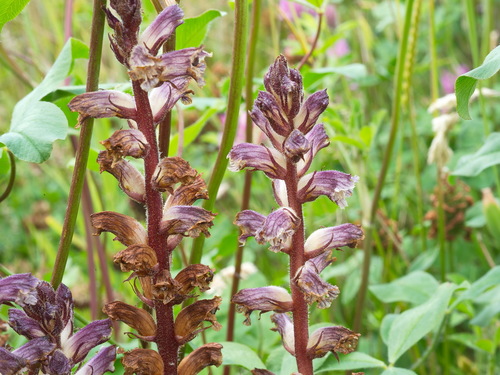
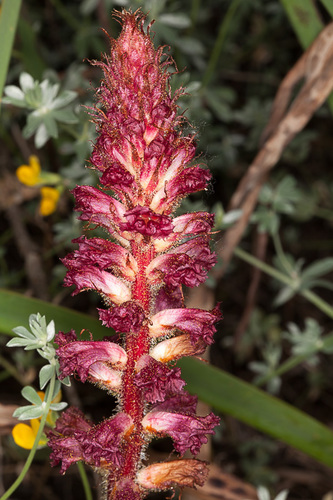
A parasitic flowering plant in the family Orobanchaceae, characterized by its lack of chlorophyll and reddish-purple stems.
Benefits & Perks
["rare/collector’s item"]
Botanical Classification
| Phylum: | Magnoliophyta |
| Class: | Magnoliopsida |
| Order: | Lamiales |
| Family: | Orobanchaceae |
| Genus: | Orobanche |
| Botanical Name: | Orobanche sanguinea |
Plant Characteristics
Basic Information
- Category: Flowers
- Suitable Location: indoor pot or shaded garden bed
- Suitable For:
- Is Weed: No
- Allergenicity: low
Environmental Needs
- Climate: {"temperatureRange":"10–30°C"}
- Hardiness: {"zones":"5–9"}
- Misting: not required
- Drainage: Moderate to fast-draining, depending on host plant's needs.
- Soil Type: Well-draining soil suitable for host plant, often with organic matter.
Maintenance Level
- Maintenance Level: very low
- Toughness Level: very low
- Pruning Frequency: N/A
- Pruning Intensity: N/A
Care Details
Ideal Sunlight Coverage:
Indirect sunlight; host plant's light requirements dictate Orobanche's exposure.
Sunlight Tolerance Tips:
Acclimate Orobanche gradually to light levels matching the host plant; avoid direct sunlight to prevent scorching of host plant.
Care Requirements
Care Difficulty
expert onlychallenging
Sunlight
partial shade to full shade
Match light conditions to host plant; avoid direct sun; monitor host plant's health.
Watering
rarely required, only when soil is completely dry
Avoid overwatering; ensure host plant is adequately watered; monitor host plant's moisture needs.
Soil
well-drained, sandy or loamy soil
pH: Varies by host plant, typically neutral to slightly acidic (6.0–7.0).
Match soil to host plant's needs; ensure good drainage; monitor soil moisture.
Temperature
Moderate temperatures, typically 15–25°C, following host plant's requirements.
Monitor host plant's temperature needs; maintain moderate conditions; protect from extremes.
Fertilizing
not required
Focus fertilization on host plant; avoid direct fertilization of Orobanche; use balanced fertilizer for host.
Propagation
Methods
Seed propagation, requiring a host plant for germination and establishment.
Step-by-Step Propagation Guide
- Sow seeds near host plant roots.
- Maintain moisture.
- Monitor for attachment to host.
Best Time: Spring or early summer when host plants are actively growing.
Environment
Warm, humid conditions with indirect light, matching host plant's environment.
Medium
Host plant's growing medium, often well-draining soil with organic matter.
Hormone
Not applicable; Orobanche relies on host plant for establishment.
Timeline
Germination may take weeks to months; establishment depends on host plant's health.
Tools Needed
Seed tray, host plants, moisture-retentive medium.
Quick Tips
Ensure close proximity to host plant; maintain consistent moisture; be patient with germination.
Pruning & Repotting
Pruning Guide
Method
N/A
Pruning Plan
Not applicable; Orobanche is a parasitic plant and does not require pruning.
Tools
N/A
Checklist
N/A
Repotting Guide
Best Season
Spring or early summer, coinciding with host plant's active growth.
Pot Size
One size up for host plant; ensure minimal disturbance to Orobanche attachment.
Method
Carefully transfer host plant with attached Orobanche; maintain soil integrity around roots.
Suggestions
Repot only if host plant requires repotting; ensure Orobanche remains attached to host during process.
Checklist
Prepare new pot; handle host plant gently; maintain Orobanche connection; use appropriate soil.
Advanced Care Tips
Watering Mastery
Watering Checklist
Check host plant's soil moisture; water host plant deeply; avoid direct watering of Orobanche.
How to Apply Water Properly
Water the host plant thoroughly, ensuring even moisture distribution; avoid direct watering of Orobanche unless necessary for germination or initial establishment.
Watering Schedule Tips
Water sparingly, as Orobanche is a parasitic plant and relies on host plants for moisture; avoid direct watering unless cultivating as a host-dependent species.
Soil Improvement
Amend soil based on host plant's requirements; ensure good drainage and aeration.
Temperature Stress Management
Signs of Temperature Issues
Host plant wilting, chlorosis, or stunted growth; Orobanche may fail to develop if host is stressed.
Cold Stress
Low temperatures can slow host plant growth, reducing Orobanche's ability to parasitize.
Solution: Provide adequate warmth for the host plant; use grow lights or heating mats if necessary.
Hot Stress
Excessive heat can stress the host plant, reducing its vigor and Orobanche's parasitic success.
Solution: Ensure proper ventilation and shade for the host plant; maintain consistent moisture.
Fertilizing Guide
Fertilizing Checklist
Fertilize host plant regularly; avoid Orobanche contact with fertilizer; monitor host plant's growth.
Fertilizing Method
Fertilize the host plant according to its needs; Orobanche derives nutrients from the host.
Common Problems & Solutions
Toxicity Warning
Cats
ToxicOrobanche sanguinea is toxic to cats if consumed. The plant's toxic constituents can cause severe gastrointestinal distress and neurological complications in felines, potentially resulting in serious health issues if not addressed promptly.
⚠️ Symptoms:
🌿 Toxic Parts:
⚡ Toxic If:
if eaten
Dogs
ToxicOrobanche sanguinea poses a toxic risk to dogs if ingested. The plant's toxic compounds can induce severe gastrointestinal and neurological symptoms in canines, potentially leading to dehydration, electrolyte imbalances, and systemic toxicity.
⚠️ Symptoms:
🌿 Toxic Parts:
⚡ Toxic If:
if eaten
Humans
ToxicOrobanche sanguinea is known to contain toxic compounds that can cause significant physiological distress upon ingestion. The plant lacks chlorophyll and derives nutrients parasitically, which may contribute to the accumulation of harmful substances. Consumption can lead to gastrointestinal upset, neurological effects, and potential organ damage due to the presence of toxic alkaloids.
⚠️ Symptoms:
🌿 Toxic Parts:
⚡ Toxic If:
if eaten
Frequently Asked Questions
Q: Is Orobanche sanguinea toxic to pets?
A: There is insufficient data on its toxicity to pets.
Q: How does Orobanche sanguinea grow?
A: It is a parasitic plant that lacks chlorophyll and relies on host plants for nutrients.
Q: Is Orobanche sanguinea suitable for beginners?
A: No, it is challenging to cultivate and is best suited for expert growers.
Quick Reference
| Family: | Orobanchaceae |
| Care: | expert only |
| Light: | partial shade to full shade |
| Water: | rarely required, only when soi |
Get Expert Care Tips
Download the Plantious app for personalized care reminders and plant identification!
Google Play App Store