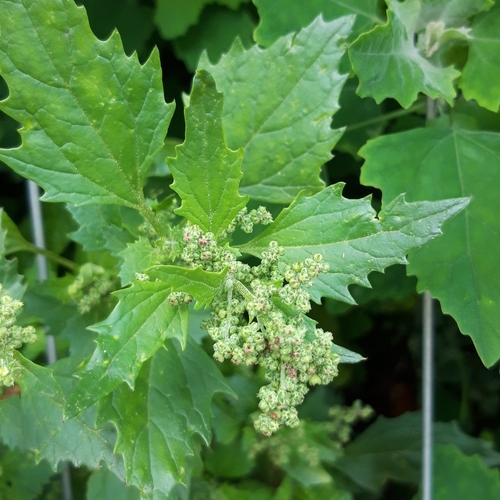
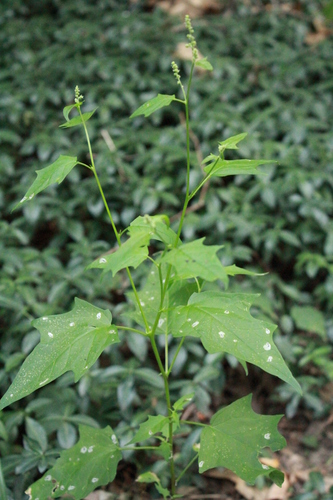
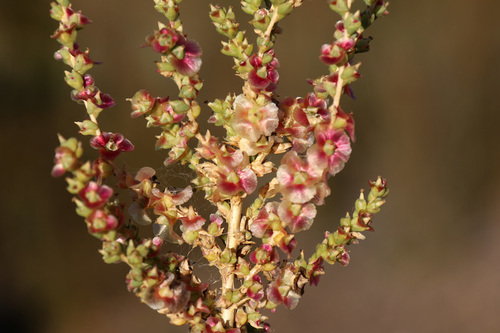
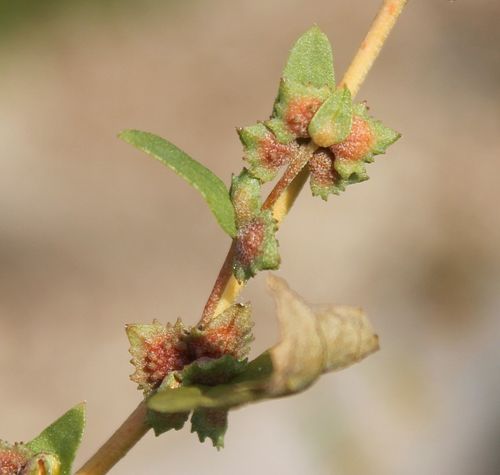
Spinach
spinacia oleracea
Also known as: ["Garden Spinach","Common Spinach"]
Overview
A leafy green vegetable widely cultivated for its edible leaves, rich in vitamins and minerals.
Benefits & Perks
["edible fruits","medicinal use","culinary herb","aesthetic foliage"]
Botanical Classification
| Phylum: | Magnoliophyta |
| Class: | Magnoliopsida |
| Order: | Caryophyllales |
| Family: | Amaranthaceae |
| Genus: | Spinacia |
| Botanical Name: | Spinacia oleracea |
Plant Characteristics
Basic Information
- Category: Leaf Plants
- Suitable Location: garden bed or container in a location with at least 6 hours of sunlight daily
- Suitable For:
- Is Weed: No
- Allergenicity: low
Environmental Needs
- Climate: {"temperatureRange":"10–30°C"}
- Hardiness: {"zones":"8–11"}
- Misting: rarely required, only if ambient humidity is very low
- Drainage: Well-draining to moderately draining; avoid waterlogged conditions.
- Soil Type: Rich, loamy soil with good organic matter content; well-draining but moisture-retentive.
Maintenance Level
- Maintenance Level: moderate
- Toughness Level: moderate
- Pruning Frequency: As needed for harvesting; no formal pruning schedule.
- Pruning Intensity: Light; only remove mature leaves to allow younger leaves to grow.
Care Details
Ideal Sunlight Coverage:
Full sun (6–8 hours of direct sunlight per day); partial shade during the hottest part of the day in summer to prevent bolting.
Sunlight Tolerance Tips:
Acclimate seedlings gradually to direct sunlight; provide shade cloth or partial shade during peak summer heat; rotate plants regularly for even light exposure.
Care Requirements
Care Difficulty
easyeasy
Sunlight
full sun to partial shade
Use reflective mulch to increase light reflection; avoid placing near large trees that cast deep shade; monitor for signs of sunburn or etiolation.
Watering
every 5–7 days, allowing soil to dry slightly between waterings
Water thoroughly but infrequently; ensure soil dries slightly between waterings; avoid wetting foliage to prevent disease.
Soil
well-draining, fertile, loamy soil with moderate organic content
pH: 6.0–7.0 (slightly acidic to neutral).
Mulch to retain moisture and suppress weeds; avoid compacting soil around roots; test pH annually and adjust if necessary.
Temperature
Ideal temperature range: 60–75°F (15–24°C); prefers cooler conditions; may bolt (go to seed) in temperatures above 80°F (27°C).
Use shade cloth in summer; protect from frost in winter; maintain consistent temperatures to prevent bolting.
Fertilizing
every 4–6 weeks during active growth with a balanced, water-soluble fertilizer
Apply fertilizer after watering to prevent root burn; focus on nitrogen-rich fertilizers for leafy growth; stop fertilizing as days shorten in autumn.
Propagation
Methods
Seeds; direct sowing or indoor starting 4–6 weeks before last frost.
Step-by-Step Propagation Guide
- Sow seeds ½ inch deep, 2–3 inches apart.
- Thin seedlings to 6–8 inches apart.
- Keep soil consistently moist until germination.
Best Time: Early spring, as soon as soil can be worked; indoor starting can begin 4–6 weeks before the last frost date.
Environment
Warm soil (60–75°F), consistent moisture, and full sun; protect seedlings from strong winds or heavy rain.
Medium
Well-draining seed starting mix; can be sown directly into garden soil.
Hormone
Not required for seeds.
Timeline
Germination in 7–14 days; harvest in 40–50 days for baby spinach; full maturity in 6–8 weeks.
Tools Needed
Seed trays or garden space, soil, water, thinning shears (optional).
Quick Tips
Sow thickly and thin later for a continuous harvest; use row covers to protect young seedlings from pests; succession plant every 2–3 weeks for continuous yield.
Pruning & Repotting
Pruning Guide
Method
Hand-pick outer leaves, leaving the center intact for continuous growth; avoid cutting too close to the base.
Pruning Plan
Not typically required; focus on harvesting outer leaves to encourage new growth.
Tools
Sharp scissors or knife (for larger harvests).
Checklist
Harvest outer leaves first; leave at least 4–6 leaves on the plant; avoid cutting the central crown.
Repotting Guide
Best Season
Not applicable; if grown in containers, repot in early spring if roots become crowded.
Pot Size
Not applicable; if repotting, choose a container only slightly larger than the current one.
Method
Not applicable; if repotting, use fresh soil mix and ensure good drainage.
Suggestions
Not typically repotted; grown as an annual in garden beds or containers.
Checklist
Not applicable; if repotting, check for root bound conditions, use fresh soil, and ensure proper drainage.
Advanced Care Tips
Watering Mastery
Watering Checklist
Check soil moisture daily; water when top inch is dry; ensure proper drainage; avoid overhead watering.
How to Apply Water Properly
Water directly at the base of the plant, ensuring even moisture reaches the root zone; water early in the morning to minimize evaporation and fungal growth; allow excess water to drain freely.
Watering Schedule Tips
Water deeply once the top inch of soil feels dry; reduce frequency in winter to prevent root rot.
Soil Improvement
Add compost or well-rotted manure to improve fertility and structure; incorporate perlite or sand for better drainage if needed.
Temperature Stress Management
Signs of Temperature Issues
Bolting (rapid stem elongation and flowering), yellowing leaves, stunted growth, or wilting.
Cold Stress
Low temperatures can slow growth and cause leaf discoloration; frost can damage or kill the plant.
Solution: Use row covers or cold frames to protect from frost; plant in a sheltered location; avoid overwatering in cold conditions to prevent root rot.
Hot Stress
Excessive heat can cause bolting, reduced leaf quality, and wilting; heat stress may lead to premature flowering and seed production.
Solution: Provide shade during peak heat; increase watering frequency; mulch to retain soil moisture; plant in a location with afternoon shade.
Fertilizing Guide
Fertilizing Checklist
Use balanced fertilizer; dilute properly; apply during active growth; avoid late-season fertilization.
Fertilizing Method
Use a balanced, water-soluble fertilizer diluted to half strength every 4–6 weeks during the growing season; avoid fertilizing in late summer or fall to prevent bolting.
Common Problems & Solutions
Toxicity Warning
Cats
Non-toxicSpinach is not considered toxic to cats. It can be offered in small amounts as a treat, but it should not replace a balanced diet.
⚡ Toxic If:
Generally non-toxic
Dogs
Non-toxicSpinach is not considered toxic to dogs. It can be a healthy addition to a dog's diet in moderation, providing vitamins and minerals.
⚡ Toxic If:
Generally non-toxic
Humans
Non-toxicSpinacia oleracea, commonly known as spinach, is not considered toxic to humans. It is a nutrient-rich leafy green vegetable that is widely consumed for its health benefits.
⚡ Toxic If:
Generally non-toxic
Frequently Asked Questions
Q: Is spinach safe for pets?
A: Yes, spinach is non-toxic to dogs and cats.
Q: How often should spinach be watered?
A: Spinach requires consistent moisture, so water when the top inch of soil feels dry.
Q: Can spinach be grown indoors?
A: Yes, spinach can be grown indoors in containers with adequate light and care.
Quick Reference

| Family: | Amaranthaceae |
| Care: | easy |
| Light: | full sun to partial shade |
| Water: | every 5–7 days, allowing soi |
Get Expert Care Tips
Download the Plantious app for personalized care reminders and plant identification!
Google Play App Store