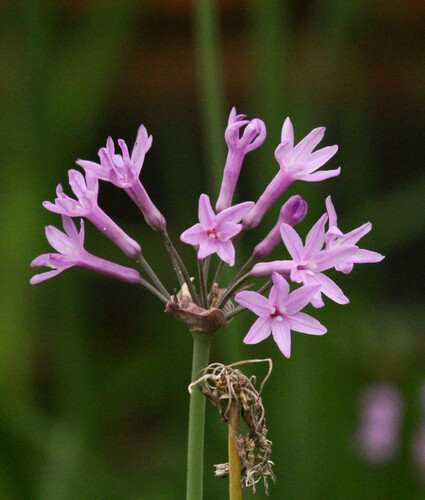
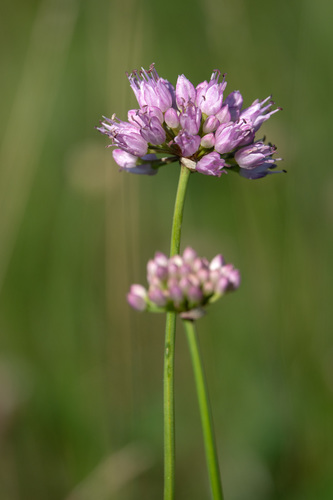
Giant Onion
allium giganteum
Also known as: ["Giant Garlic","Giant Ornamental Onion"]
Overview
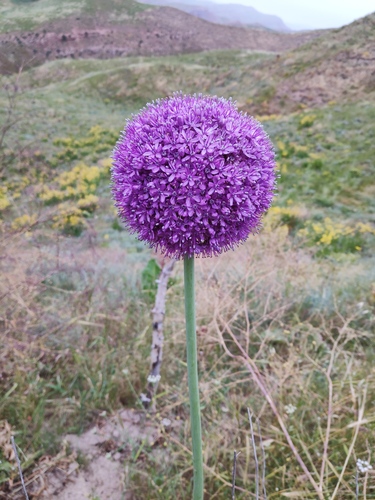
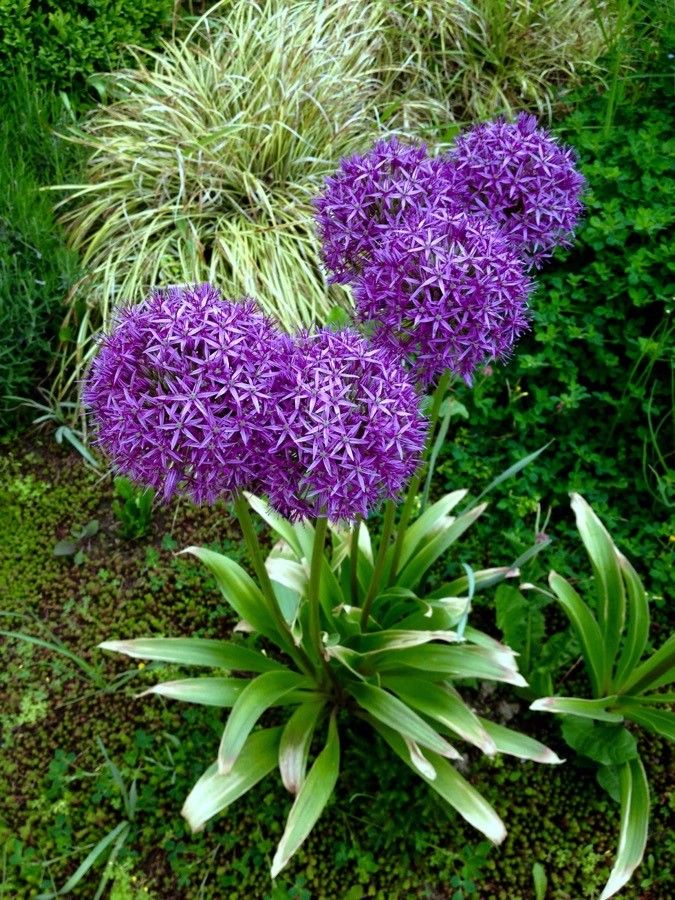
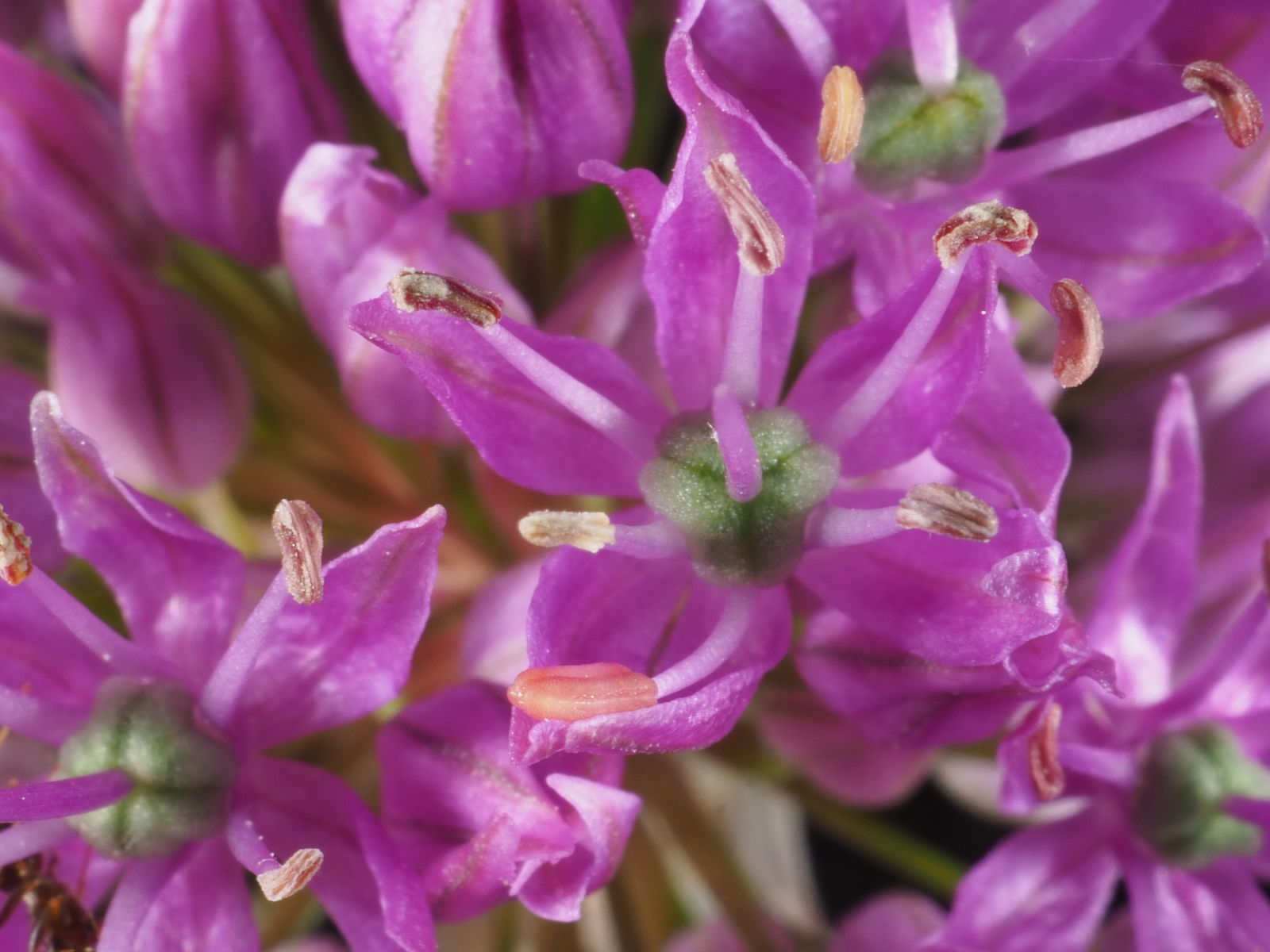
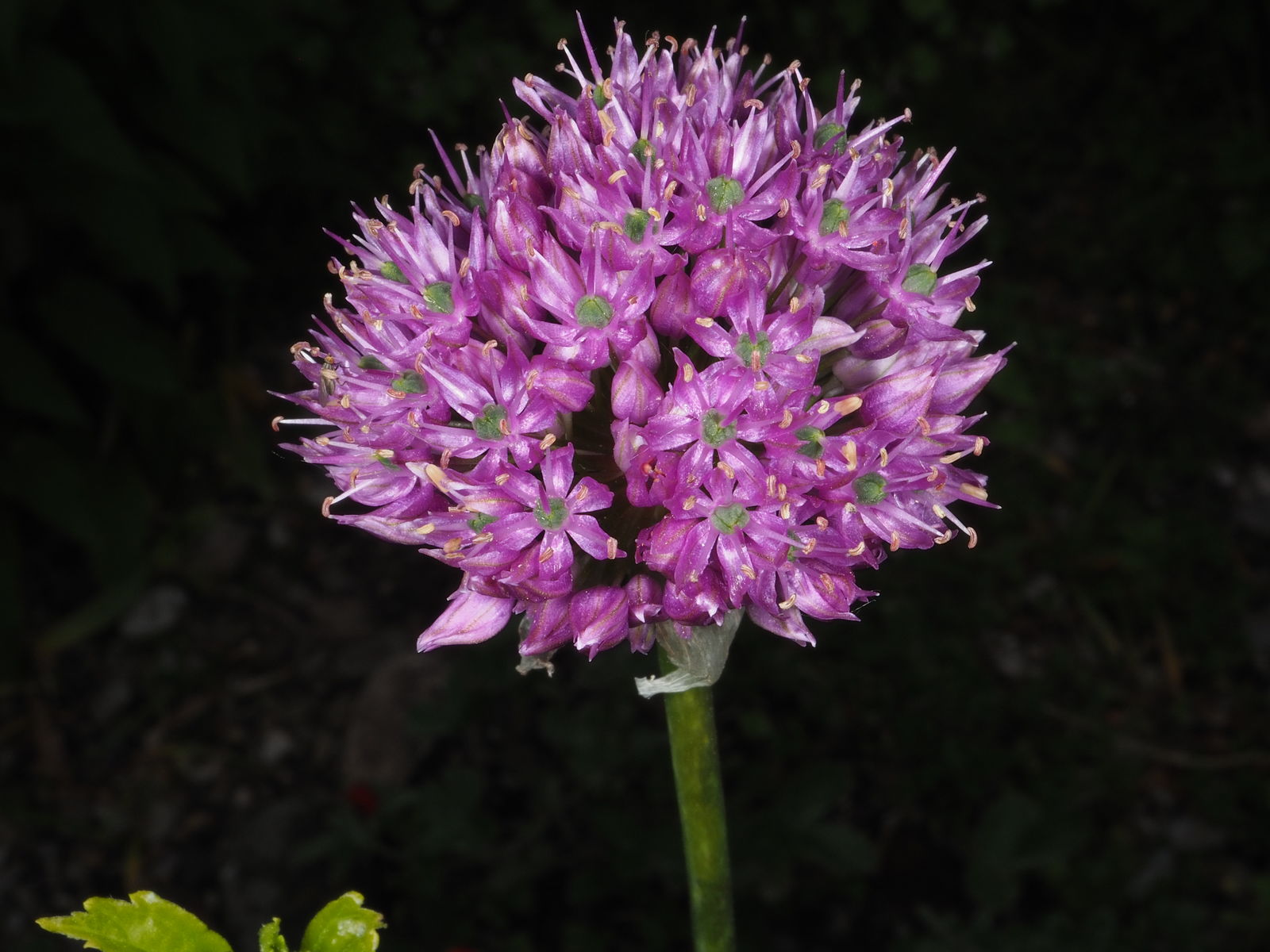
A large, ornamental onion species with tall stems and large, spherical umbels of star-shaped flowers.
Benefits & Perks
["long-flowering","deer resistant","wildlife attractant (bees, butterflies, birds)","aesthetic foliage"]
Botanical Classification
| Phylum: | Magnoliophyta |
| Class: | Liliopsida |
| Order: | Asparagales |
| Family: | Amaryllidaceae |
| Genus: | Allium |
| Botanical Name: | Allium giganteum |
Plant Characteristics
Basic Information
- Category: Flowers
- Suitable Location: garden bed or border in full sun
- Suitable For:
- Is Weed: No
- Allergenicity: low
Environmental Needs
- Climate: {"temperatureRange":"–30–35°C"}
- Hardiness: {"zones":"4–9"}
- Misting: rarely required
- Drainage: Fast-draining.
- Soil Type: Well-draining, loamy soil with added organic matter.
Maintenance Level
- Maintenance Level: low
- Toughness Level: high
- Pruning Frequency: After flowering; annually to tidy up.
- Pruning Intensity: Light.
Care Details
Ideal Sunlight Coverage:
Full sun (6–8 hours/day) in spring and summer; partial shade in hot climates to prevent scorching.
Sunlight Tolerance Tips:
Acclimate plants gradually to intense sunlight; provide afternoon shade in hot regions; ensure proper spacing for air circulation.
Care Requirements
Care Difficulty
easyeasy
Sunlight
full sun
Rotate pots for even light exposure; use shade cloth in extreme heat; avoid direct midday sun in summer.
Watering
every 7–10 days during growing season, reduce in winter
Water at the base to avoid foliage disease; ensure soil dries slightly between waterings; avoid overwatering, especially in winter.
Soil
well-drained, sandy loam
pH: Slightly alkaline (pH 6.5–7.5).
Avoid heavy clay soils; ensure good aeration; test pH before planting.
Temperature
Prefers cool to moderate temperatures (60–75°F or 15–24°C); tolerates cold but requires protection below 20°F (-6°C).
Protect from frost; avoid extreme heat exposure; adjust watering with temperature changes.
Fertilizing
every 4–6 weeks during active growth
Fertilize sparingly; apply before active growth; water after fertilizing to prevent burn.
Propagation
Methods
Division of bulbs in fall or early spring.
Step-by-Step Propagation Guide
- Dig up mature bulbs.
- Separate offsets.
- Replant at the correct depth.
- Water lightly.
Best Time: Early spring or fall when bulbs are dormant.
Environment
Cool, shaded conditions with moderate humidity.
Medium
Well-draining soil mix with added grit or sand.
Hormone
Not required for bulb division.
Timeline
Bulbs establish quickly in the first season; flowering may take 1–2 years.
Tools Needed
Garden fork, sharp knife, gloves.
Quick Tips
Divide every 3–4 years to prevent overcrowding; plant offsets at the same depth as the parent bulb.
Pruning & Repotting
Pruning Guide
Method
Cut flower stalks at the base; remove yellowed foliage in fall.
Pruning Plan
Minimal pruning needed; remove spent flower stalks to encourage bulb growth.
Tools
Pruning shears, gloves.
Checklist
Remove dead flowers; cut back yellowed leaves; clean tools after use.
Repotting Guide
Best Season
N/A (bulbs are planted in fall or spring).
Pot Size
N/A.
Method
N/A (bulbs are planted at a depth of 3–4 times their height).
Suggestions
Not typically repotted; bulbs are planted directly in the ground.
Checklist
N/A.
Advanced Care Tips
Watering Mastery
Watering Checklist
Check soil moisture before watering; water deeply; ensure drainage; adjust for season.
How to Apply Water Properly
Water thoroughly until it drains from the bottom, ensuring the root zone is moistened. Water early in the morning to minimize evaporation and fungal issues.
Watering Schedule Tips
Water deeply once every 7–10 days during active growth, reducing frequency to every 2–3 weeks in winter. Adjust based on rainfall and soil moisture retention.
Soil Improvement
Add sand or grit for drainage; incorporate compost for fertility; ensure pH is balanced.
Temperature Stress Management
Signs of Temperature Issues
Chlorosis or browning in extreme heat; stunted growth or bulb rot in cold, wet conditions.
Cold Stress
Low temperatures slow growth and can damage foliage; bulbs may rot if soil is waterlogged.
Solution: Mulch heavily around bulbs in fall; provide frost cloth protection in severe cold; ensure well-draining soil.
Hot Stress
Excessive heat can scorch leaves and reduce flowering; bulbs may dehydrate if soil dries out.
Solution: Provide afternoon shade; water deeply in the morning; use mulch to retain soil moisture.
Fertilizing Guide
Fertilizing Checklist
Use balanced fertilizer; apply in spring; avoid late-season feeding.
Fertilizing Method
Use a balanced, slow-release fertilizer in early spring; avoid high-nitrogen formulas; discontinue in late summer.
Common Problems & Solutions
Toxicity Warning
Cats
ToxicCats are highly sensitive to the organosulfur compounds in Allium giganteum, which can cause severe hemolytic anemia and other systemic toxic effects. Even small amounts can be harmful.
⚠️ Symptoms:
🌿 Toxic Parts:
⚡ Toxic If:
if eaten
Dogs
ToxicThe organosulfur compounds in Allium giganteum can cause oxidative damage to red blood cells in dogs, leading to hemolytic anemia. This is particularly dangerous for dogs due to their sensitivity to such compounds.
⚠️ Symptoms:
🌿 Toxic Parts:
⚡ Toxic If:
if eaten
Humans
ToxicAllium giganteum contains organosulfur compounds that can cause gastrointestinal distress and other systemic effects upon ingestion. These compounds are similar to those found in onions and garlic, which are known to be toxic in sufficient quantities.
⚠️ Symptoms:
🌿 Toxic Parts:
⚡ Toxic If:
if eaten
Frequently Asked Questions
Q: Is Allium giganteum toxic to pets?
A: Yes, it is mildly toxic to dogs and cats if ingested.
Q: How tall does Allium giganteum grow?
A: It can grow up to 4 feet tall with large flower heads.
Q: Does Allium giganteum attract wildlife?
A: Yes, it attracts bees, butterflies, and birds.
Quick Reference
| Family: | Amaryllidaceae |
| Care: | easy |
| Light: | full sun |
| Water: | every 7–10 days during growi |
Get Expert Care Tips
Download the Plantious app for personalized care reminders and plant identification!
Google Play App Store