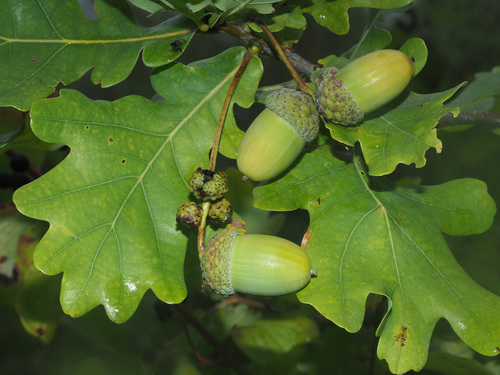
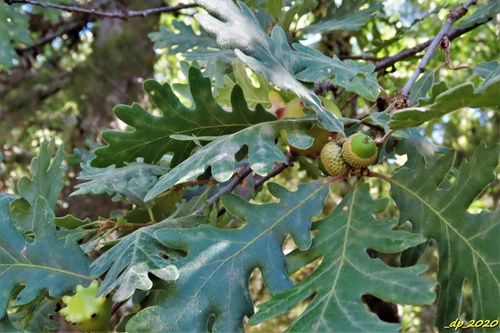
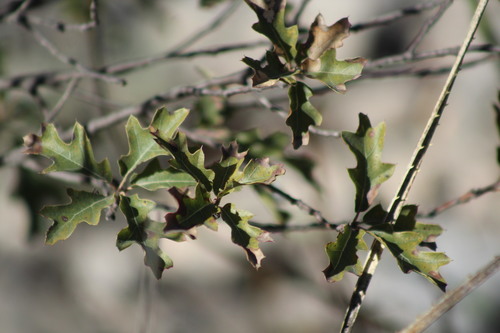
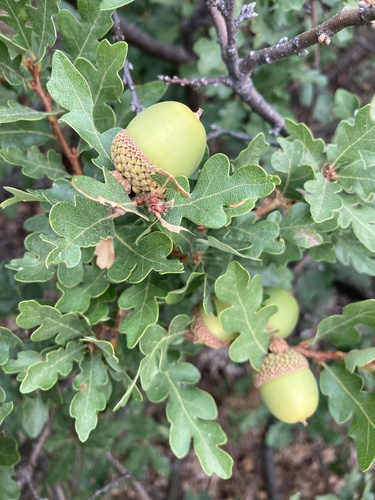
Emory Oak
quercus emoryi
Also known as: ["Emory's Oak","Mexican White Oak"]
Overview
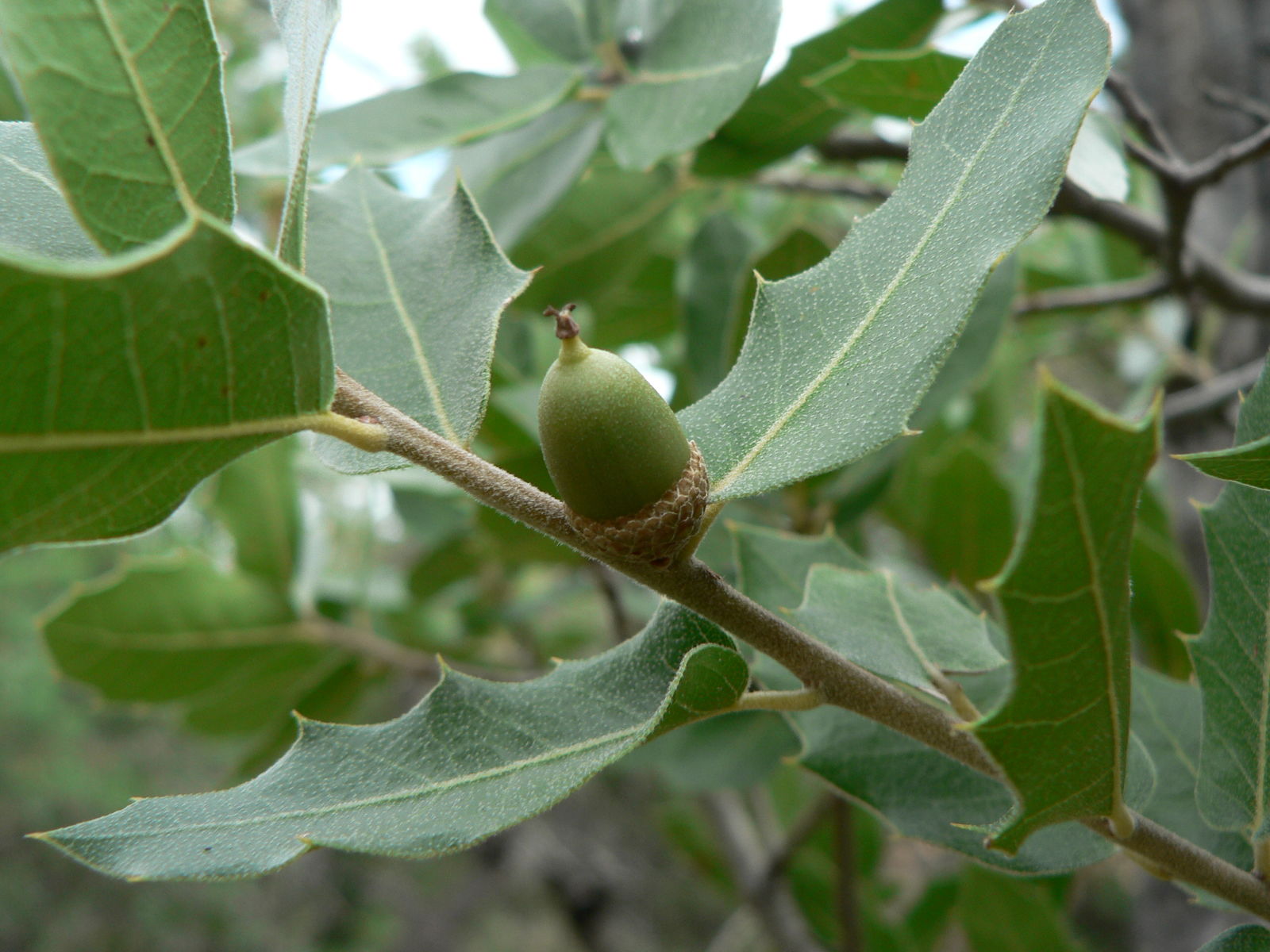
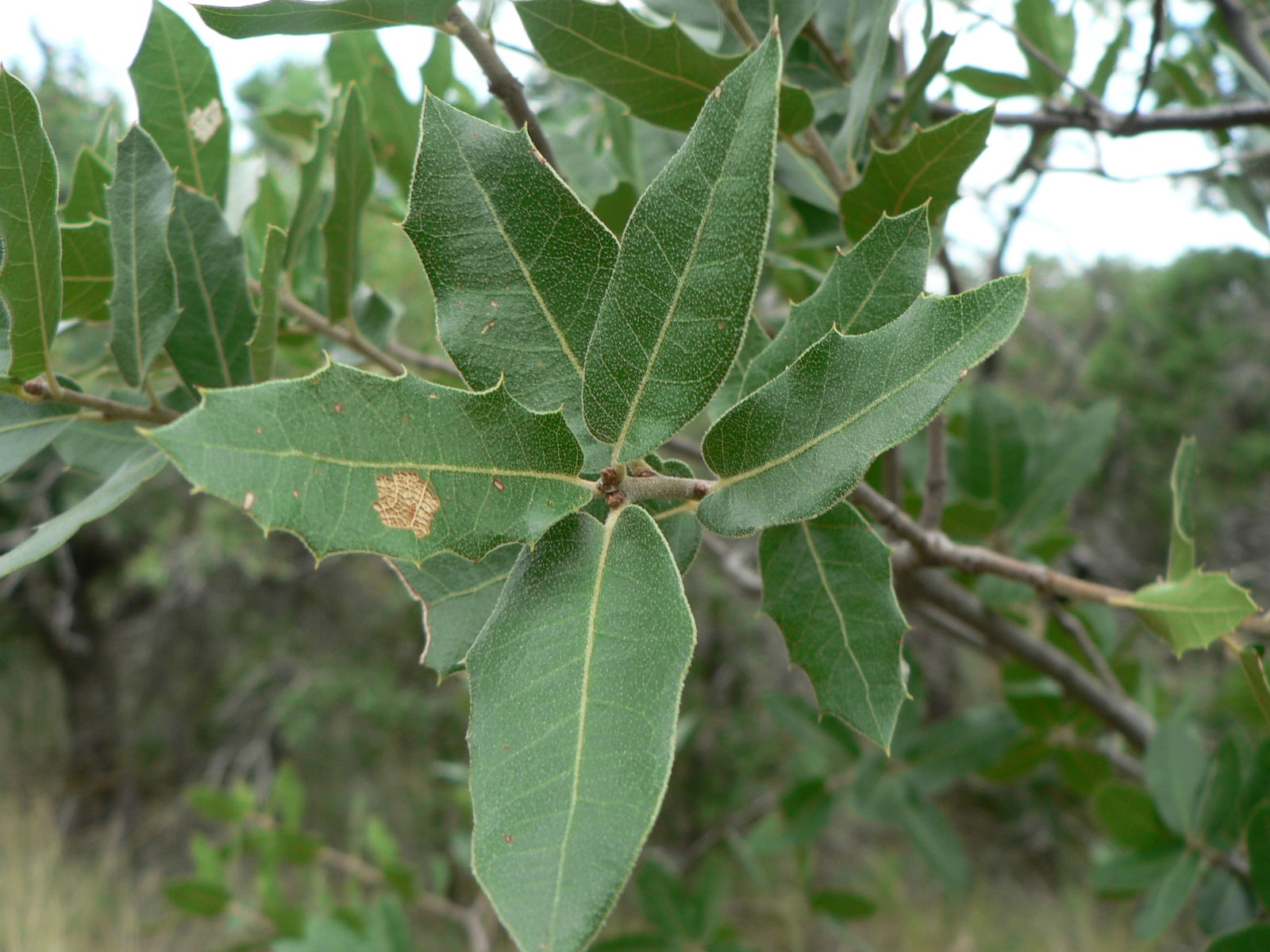
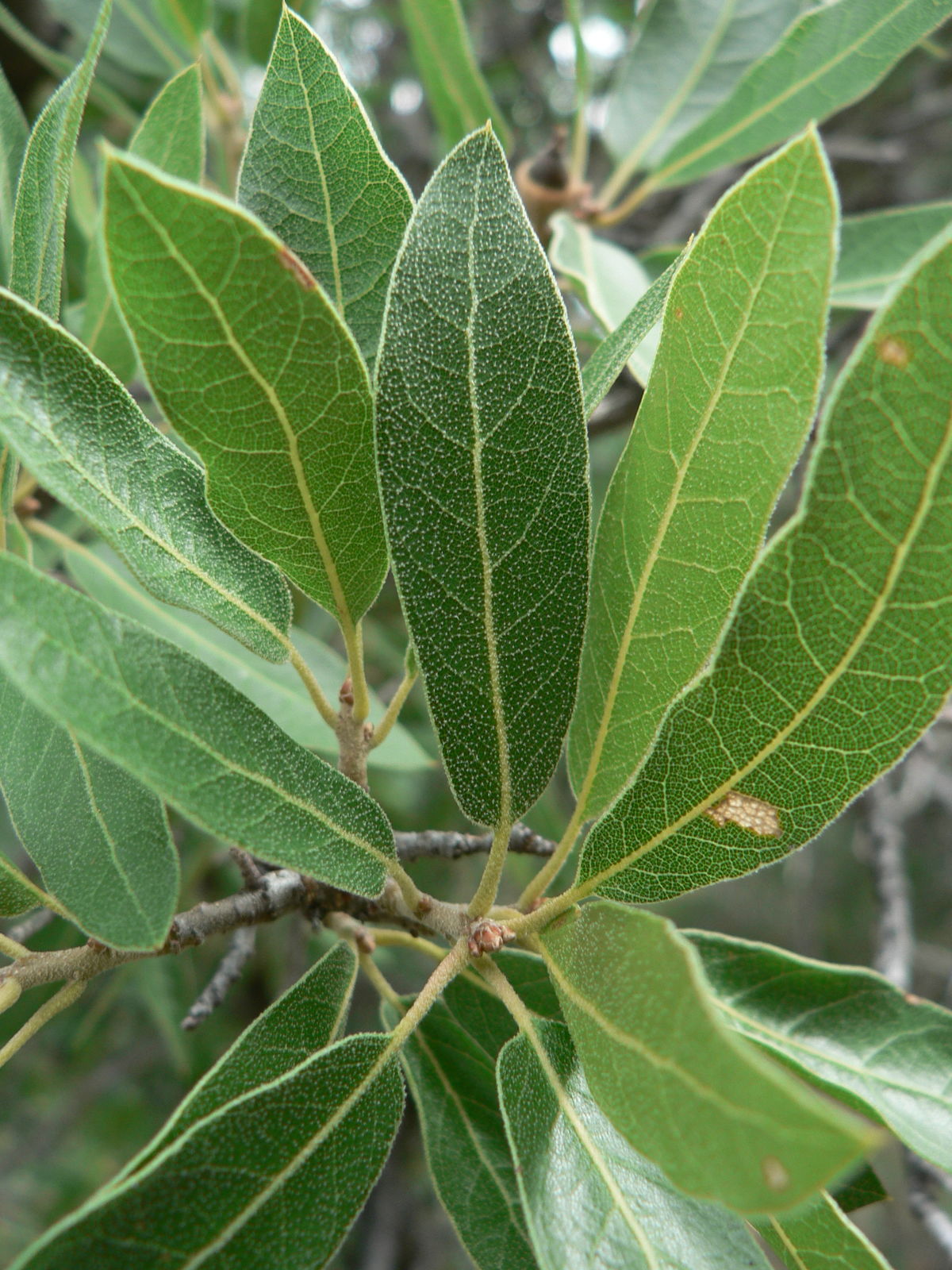
A medium-sized deciduous oak tree native to the southwestern United States and Mexico, known for its distinctive acorns and lobed leaves.
Benefits & Perks
["wildlife attractant (bees, butterflies, birds)","shade tolerant","drought tolerant"]
Botanical Classification
| Phylum: | Magnoliophyta |
| Class: | Magnoliopsida |
| Order: | Fagales |
| Family: | Fagaceae |
| Genus: | Quercus |
| Botanical Name: | Quercus emoryi |
Plant Characteristics
Basic Information
- Category: Trees
- Suitable Location: outdoor garden in a sunny area with good air circulation
- Suitable For:
- Is Weed: No
- Allergenicity: low
Environmental Needs
- Climate: {"temperatureRange":"–12–43°C"}
- Hardiness: {"zones":"7–9"}
- Misting: rarely required, only if grown in very dry indoor conditions
- Drainage: Fast-draining to moderate-draining.
- Soil Type: Well-draining, loamy soil with some organic matter. Tolerates rocky or clay soils if drainage is adequate.
Maintenance Level
- Maintenance Level: moderate
- Toughness Level: moderate
- Pruning Frequency: Annually in late winter or early spring before new growth begins.
- Pruning Intensity: Moderate. Remove no more than 20–25% of the canopy at one time to avoid stressing the tree.
Care Details
Ideal Sunlight Coverage:
Full sun (6–8 hours of direct sunlight daily). Tolerates partial shade but may become leggy or less vigorous.
Sunlight Tolerance Tips:
Acclimate young plants to full sun gradually to avoid leaf scorch. In hot climates, provide some afternoon shade to prevent stress. Outdoor placement is ideal, but indoor plants need a south-facing window.
Care Requirements
Care Difficulty
moderatemoderate
Sunlight
full sun to partial shade
Rotate plant for even light exposure; use sheer curtains to filter intense midday sun; monitor for signs of sunburn.
Watering
every 7–14 days during dry periods, less frequently in winter
Water thoroughly but infrequently; ensure soil dries partially between waterings; avoid overwatering to prevent root rot.
Soil
well-drained, loamy soil with moderate fertility
pH: Slightly acidic to neutral (pH 6.0–7.0).
Avoid heavy clay soils; ensure good drainage; mulch to retain moisture and suppress weeds.
Temperature
Prefers temperate conditions, 60–75°F (15–24°C). Tolerates cold down to 0°F (-18°C) but thrives in moderate temperatures.
Avoid sudden temperature fluctuations; protect from winter winds; ensure good air circulation in summer.
Fertilizing
every 3 months with balanced, slow-release fertilizer during active growth
Fertilize only if growth is poor; avoid high-nitrogen formulas; water well after application.
Propagation
Methods
Seed propagation is most common. Cuttings are difficult and rarely successful for this species.
Step-by-Step Propagation Guide
- Collect mature acorns in fall.
- Stratify seeds.
- Plant in pots or ground in spring.
- Water sparingly until established.
Best Time: Fall or winter for seeds (stratification required). Cuttings, if attempted, should be taken in late summer.
Environment
Seeds need cold stratification (40°F/4°C for 60–90 days). Cuttings require high humidity and indirect light.
Medium
Well-draining seed starting mix or sandy loam for seeds. Cuttings require a sterile, moist medium like perlite and peat moss.
Hormone
Not typically needed for seeds. Rooting hormone may help with cuttings but success rates are low.
Timeline
Seeds may take 1–2 years to germinate after stratification. Cuttings, if successful, may root in 8–12 weeks.
Tools Needed
Pruners, pots, seed starting mix, plastic wrap (for humidity), labels.
Quick Tips
Collect acorns before they fall; stratify in a damp paper towel inside a bag in the refrigerator; plant shallowly.
Pruning & Repotting
Pruning Guide
Method
Use clean cuts just outside the branch collar. Avoid topping or excessive heading cuts.
Pruning Plan
Prune to remove dead, diseased, or crossing branches, and to shape the tree. Focus on maintaining a strong central leader and open canopy.
Tools
Pruning shears, loppers, saw (for larger branches), disinfectant (bleach solution).
Checklist
Disinfect tools; prune in late winter; remove dead/diseased wood; avoid over-pruning; clean up debris.
Repotting Guide
Best Season
Early spring before active growth begins.
Pot Size
Increase pot size by 2–3 inches in diameter.
Method
Gently remove the plant, trim any circling roots, place in a slightly larger pot with fresh, well-draining soil, and water thoroughly.
Suggestions
Generally not required for established trees. Container-grown specimens may need repotting every 3–5 years if root-bound.
Checklist
Choose appropriate pot; prepare fresh soil mix; trim roots if needed; water well after repotting; place in shade for a few days.
Advanced Care Tips
Watering Mastery
Watering Checklist
Check soil moisture before watering; water deeply; ensure drainage; adjust frequency seasonally.
How to Apply Water Properly
Water at the base of the plant, ensuring moisture reaches the root zone. Water early in the morning to minimize evaporation and allow foliage to dry. Ensure excess water drains away to prevent waterlogging.
Watering Schedule Tips
Water deeply once every 7–14 days during active growth, reducing frequency to every 3–4 weeks in winter. Adjust based on rainfall and soil moisture retention.
Soil Improvement
Add compost or well-rotted manure to improve structure and fertility. Incorporate sand or perlite to enhance drainage in heavy soils.
Temperature Stress Management
Signs of Temperature Issues
Leaf drop, browning leaf margins, stunted growth, or premature leaf shedding in extreme heat or cold.
Cold Stress
Leaves may curl or drop, and growth can slow or stop. Young or newly planted trees are more susceptible to frost damage.
Solution: Mulch heavily around the base to insulate roots. Protect young trees with burlap screens in severe cold. Avoid planting in low-lying frost pockets.
Hot Stress
Wilting, leaf scorch (brown or yellow edges), and reduced growth due to excessive transpiration.
Solution: Provide supplemental water during heatwaves. Use shade cloth or move potted plants to a cooler location. Mulch to retain soil moisture.
Fertilizing Guide
Fertilizing Checklist
Use balanced fertilizer; apply in spring; avoid overfertilization; water after feeding.
Fertilizing Method
Use a balanced, slow-release fertilizer in early spring. Apply sparingly, as oaks are generally low-maintenance and overfertilization can harm them.
Common Problems & Solutions
Toxicity Warning
Cats
Slightly ToxicCats are susceptible to gastrointestinal irritation if they consume parts of Quercus emoryi, with acorns posing a higher risk due to tannin content.
⚠️ Symptoms:
🌿 Toxic Parts:
⚡ Toxic If:
if eaten
Dogs
Slightly ToxicDogs may experience gastrointestinal upset if they ingest parts of Quercus emoryi, particularly the acorns, due to the presence of tannins.
⚠️ Symptoms:
🌿 Toxic Parts:
⚡ Toxic If:
if eaten
Humans
Slightly ToxicQuercus emoryi, commonly known as Emory oak, contains tannins which can cause gastrointestinal distress if consumed in large quantities. The acorns are particularly problematic due to higher tannin concentrations.
⚠️ Symptoms:
🌿 Toxic Parts:
⚡ Toxic If:
if eaten
Frequently Asked Questions
Q: What is the typical height of Quercus emoryi?
A: It typically grows to 20–30 feet tall, though it can reach up to 50 feet in ideal conditions.
Q: Are the acorns of Quercus emoryi edible?
A: Yes, the acorns are edible after proper leaching to remove tannins.
Q: Does Quercus emoryi require much water?
A: It is drought-tolerant once established but benefits from occasional deep watering during prolonged dry spells.
Quick Reference


| Family: | Fagaceae |
| Care: | moderate |
| Light: | full sun to partial shade |
| Water: | every 7–14 days during dry p |
Get Expert Care Tips
Download the Plantious app for personalized care reminders and plant identification!
Google Play App Store