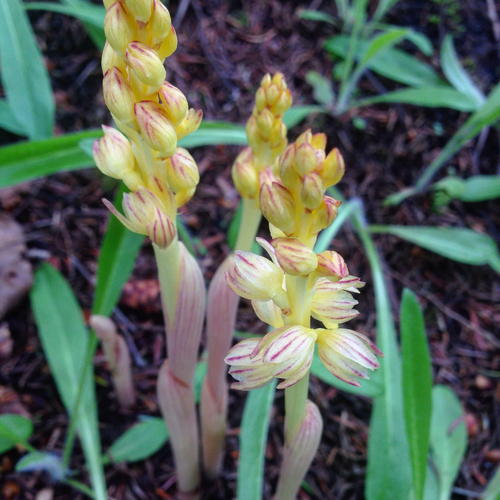
Striped Coralroot
corallorhiza striata
Also known as: ["Striped Coral Root","Striped Coral-root Orchid"]
Overview
A mycoheterotrophic orchid species that lacks chlorophyll and derives nutrients from fungi.
Benefits & Perks
["rare/collector’s item","wildlife attractant (bees, butterflies, birds)"]
Botanical Classification
| Phylum: | Magnoliophyta |
| Class: | Liliopsida |
| Order: | Asparagales |
| Family: | Orchidaceae |
| Genus: | Corallorhiza |
| Botanical Name: | Corallorhiza striata |
Plant Characteristics
Basic Information
- Category: Flowers
- Suitable Location: forest floor or shaded garden bed with partial light
- Suitable For:
- Is Weed: No
- Allergenicity: low
Environmental Needs
- Climate: {"temperatureRange":"0–30°C"}
- Hardiness: {"zones":"3–8"}
- Misting: every 2–3 days to maintain moderate humidity
- Drainage: Well-draining but moisture-retentive.
- Soil Type: A mix that mimics natural woodland soil, often containing organic matter and components to support mycorrhizal fungi.
Maintenance Level
- Maintenance Level: very high
- Toughness Level: very low
- Pruning Frequency: As needed, typically annually or when dead foliage is present.
- Pruning Intensity: Light pruning only.
Care Details
Ideal Sunlight Coverage:
Bright indirect light for 4–6 hours per day. Can tolerate partial shade, especially during intense summer sun.
Sunlight Tolerance Tips:
Acclimate the plant gradually to brighter light to avoid leaf burn. Protect from direct midday sun, especially in summer. Indoors, place near an east or north-facing window.
Care Requirements
Care Difficulty
expert onlychallenging
Sunlight
partial shade to dappled light
Avoid direct afternoon sun; rotate plant for even light exposure; adjust light levels seasonally.
Watering
every 7–10 days during active growth, reduce in dormancy
Water only when the soil is dry; avoid overwatering to prevent root rot; ensure excellent drainage.
Soil
well-draining, humus-rich soil with low organic matter
pH: Slightly acidic to neutral (pH 5.5–7.0).
Use a soil mix with organic matter; ensure good drainage; avoid heavy, waterlogged soils.
Temperature
Prefers cool temperatures, ideally between 50–70°F (10–21°C). Tolerates cooler conditions but should be protected from frost.
Protect from frost; avoid sudden temperature fluctuations; maintain moderate temperatures.
Fertilizing
rarely required, if used then monthly with diluted orchid fertilizer during spring and summer
Do not fertilize; rely on natural soil nutrients; avoid chemical fertilizers.
Propagation
Methods
Primarily through seed, though this is challenging without the presence of specific mycorrhizal fungi. Division of rhizomes is possible but rare.
Step-by-Step Propagation Guide
- Collect mature seeds.
- Prepare sterile propagation medium.
- Sow seeds.
- Maintain high humidity.
- Wait for germination.
Best Time: Spring, when the plant is actively growing.
Environment
High humidity, consistent moisture, and indirect light are crucial for successful propagation.
Medium
A specialized mix mimicking natural soil conditions, often containing components to support mycorrhizal fungi.
Hormone
Not applicable for seed propagation; rooting hormone is not used for rhizome division.
Timeline
Seed propagation can take years to germinate and establish; rhizome division may take several months to recover.
Tools Needed
Sterile containers, propagation medium, humidity dome, labels.
Quick Tips
Ensure mycorrhizal presence; maintain high humidity; be patient with germination.
Pruning & Repotting
Pruning Guide
Method
Carefully snip away dead or yellowing leaves at the base using clean, sharp tools.
Pruning Plan
Minimal pruning is required. Focus on removing any dead or damaged foliage to maintain plant health.
Tools
Pruning shears, sterilizing solution.
Checklist
Inspect foliage; remove dead/damaged parts; sterilize tools; avoid over-pruning.
Repotting Guide
Best Season
Early spring, before active growth begins.
Pot Size
One size up from the current pot, ensuring it is not excessively larger.
Method
Gently remove the plant, trim any dead roots, place in a slightly larger pot with fresh, well-draining soil, and water lightly.
Suggestions
Repot only if the plant is outgrowing its container or if the soil has degraded. Be cautious, as disturbing the rhizome can stress the plant.
Checklist
Check root bound status; prepare new pot; handle rhizome carefully; use appropriate soil; minimal disturbance.
Advanced Care Tips
Watering Mastery
Watering Checklist
Check soil moisture; water thoroughly; ensure drainage; avoid wetting foliage; water in morning.
How to Apply Water Properly
Water thoroughly until water drains from the bottom, ensuring the root zone is moistened. Avoid wetting the foliage to prevent fungal issues. Water in the morning to allow foliage to dry during the day.
Watering Schedule Tips
Water sparingly, allowing the potting medium to dry out between waterings. During dormancy (typically late fall to early spring), reduce watering significantly or cease entirely.
Soil Improvement
Incorporate organic matter like leaf litter or peat moss to improve structure and support mycorrhizal fungi.
Temperature Stress Management
Signs of Temperature Issues
Wilting, leaf discoloration (yellowing or browning), stunted growth, or premature dormancy.
Cold Stress
Prolonged exposure to temperatures below 40°F (4°C) can damage the roots and hinder growth, potentially leading to dieback.
Solution: Move the plant to a warmer location if temperatures drop below 40°F (4°C). Ensure good air circulation to prevent cold-induced fungal issues.
Hot Stress
Excessive heat above 80°F (27°C) can cause leaf scorch, wilting, and reduced vigor, especially if combined with low humidity.
Solution: Provide shade during peak heat, increase humidity through misting or a pebble tray, and ensure adequate watering.
Fertilizing Guide
Fertilizing Checklist
No fertilization needed; ensure mycorrhizal fungi are present; avoid nutrient-rich soils.
Fertilizing Method
Generally does not require fertilization due to its mycoheterotrophic nature (obtains nutrients from fungi in the soil). Avoid fertilizing to prevent harm to the symbiotic fungi.
Common Problems & Solutions
Toxicity Warning
Cats
Non-toxicCorallorhiza striata is not known to be toxic to cats. There are no reported adverse effects when ingested by felines.
⚡ Toxic If:
if eaten
Dogs
Non-toxicCorallorhiza striata is not known to be toxic to dogs. There are no reported adverse effects when ingested by canines.
⚡ Toxic If:
if eaten
Humans
Non-toxicCorallorhiza striata is not known to exhibit toxic effects in humans. It has no reported physiological impact when ingested.
⚡ Toxic If:
if eaten
Frequently Asked Questions
Q: Is Corallorhiza striata a true plant?
A: Yes, it is a vascular plant, but it is mycoheterotrophic, meaning it lacks chlorophyll and relies on fungi for nutrients.
Q: Can Corallorhiza striata be grown in a typical garden?
A: No, it requires specific mycorrhizal fungi and is best suited for specialized cultivation by orchid enthusiasts.
Q: Does Corallorhiza striata produce flowers?
A: Yes, it produces small, striped flowers on a slender stem, typically in late summer or early fall.
Quick Reference

| Family: | Orchidaceae |
| Care: | expert only |
| Light: | partial shade to dappled light |
| Water: | every 7–10 days during activ |
Get Expert Care Tips
Download the Plantious app for personalized care reminders and plant identification!
Google Play App Store