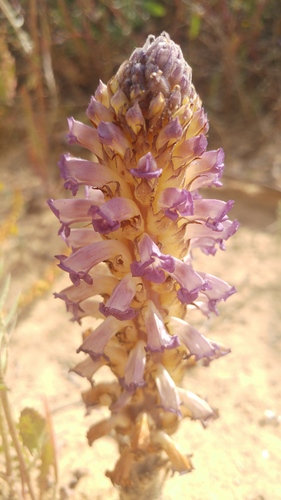
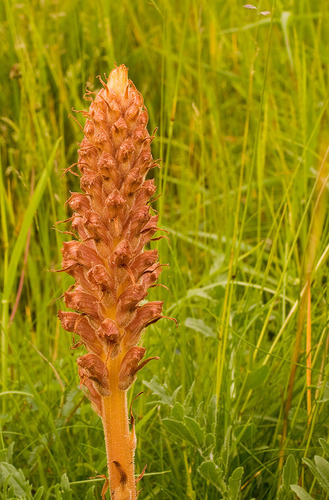
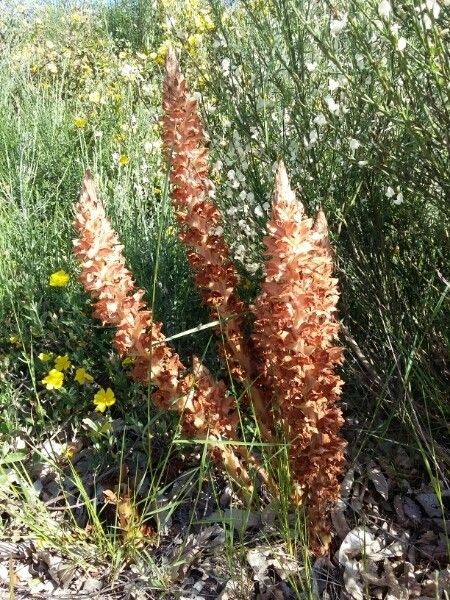
Giant Broomrape
orobanche elatior
Also known as: ["Giant Broomrape"]
Overview
A parasitic herbaceous plant with no chlorophyll, relying on host plants for nutrients.
Benefits & Perks
["rare/collector’s item"]
Botanical Classification
| Phylum: | Magnoliophyta |
| Class: | Magnoliopsida |
| Order: | Lamiales |
| Family: | Orobanchaceae |
| Genus: | Orobanche |
| Botanical Name: | Orobanche elatior |
Plant Characteristics
Basic Information
- Category: Herbs & Weeds
- Suitable Location: attached to a host plant in natural settings
- Suitable For:
- Is Weed: No
- Allergenicity: low
Environmental Needs
- Climate: {"temperatureRange":"10–30°C"}
- Hardiness: {"zones":"5–9"}
- Misting: not required
- Drainage: Fast-draining for host; avoid waterlogged conditions.
- Soil Type: Host plant-specific; well-draining mix (e.g., cactus mix, orchid bark).
Maintenance Level
- Maintenance Level: very low
- Toughness Level: very low
- Pruning Frequency: As needed for host plant maintenance.
- Pruning Intensity: Moderate to heavy, depending on host species and growth habit.
Care Details
Ideal Sunlight Coverage:
Host plant requires bright indirect light (6–8 hours/day); Orobanche benefits indirectly from host’s light conditions.
Sunlight Tolerance Tips:
Acclimate host plant gradually to avoid scorch; place in filtered light if outdoors; ensure indoor placement mimics natural light patterns.
Care Requirements
Care Difficulty
expert onlychallenging
Sunlight
partial shade to full shade
Monitor host for light stress; adjust shade as needed; avoid direct sun on host.
Watering
rarely required, only when soil is completely dry
Avoid overwatering the Orobanche itself; ensure the host plant is adequately watered; monitor host plant health for signs of stress.
Soil
well-drained, sandy or loamy soil
pH: Host-dependent; typically 6.0–7.0 for most ornamental hosts.
Use sterile mix; avoid compacted soil; maintain consistent moisture for host.
Temperature
Host plant ideal range: 65–75°F (18–24°C); Orobanche tolerates similar range but depends on host health.
Monitor host temperature; adjust placement seasonally; protect from extremes.
Fertilizing
not required
Fertilize host, not Orobanche; use weak solution; stop in winter.
Propagation
Methods
Seed propagation on host roots; rare vegetative propagation due to parasitic nature.
Step-by-Step Propagation Guide
- Sow seeds near host roots.
- Maintain moisture.
- Monitor for germination.
- Ensure host health.
Best Time: Spring, when host is actively growing and temperatures are mild.
Environment
Warm, humid conditions near host roots; indirect light.
Medium
Host root surface with sterile, moist medium (e.g., peat moss); no traditional soil needed.
Hormone
Not applicable; relies on host root contact for germination.
Timeline
Germination: 2–4 weeks; establishment: 1–2 months after initial attachment.
Tools Needed
Seeds, host plant, sterile medium, humidity dome (optional).
Quick Tips
Use fresh seeds; keep medium consistently moist; ensure host is healthy.
Pruning & Repotting
Pruning Guide
Method
Standard pruning techniques for host plant (e.g., deadheading, shaping).
Pruning Plan
Not applicable to Orobanche; focus on host plant pruning to maintain health.
Tools
Pruning shears, sterilizing solution, gloves.
Checklist
Sterilize tools; prune host only; remove dead/diseased parts; maintain airflow.
Repotting Guide
Best Season
Spring, before active growth begins.
Pot Size
One size up from current pot; ensure adequate drainage holes.
Method
Gently remove host; trim roots if needed; repot in fresh, well-draining soil; ensure Orobanche remains attached.
Suggestions
Repot host plant every 2–3 years or when root-bound; Orobanche will follow host’s new pot.
Checklist
Prepare new pot; handle roots carefully; maintain Orobanche attachment; water host after repotting.
Advanced Care Tips
Watering Mastery
Watering Checklist
Water host plant deeply; check host soil moisture; avoid direct Orobanche watering; ensure drainage.
How to Apply Water Properly
Water the host plant thoroughly at the root zone, ensuring even moisture distribution; allow excess water to drain away; avoid wetting the Orobanche directly unless necessary for initial establishment.
Watering Schedule Tips
Water sparingly, as Orobanche elatior is a parasitic plant and relies on a host for moisture; avoid direct watering unless cultivating the host plant.
Soil Improvement
Add perlite or sand for drainage; incorporate organic matter for fertility; ensure pH balance.
Temperature Stress Management
Signs of Temperature Issues
Host: wilting, leaf drop, stunted growth; Orobanche: reduced parasitic activity, yellowing.
Cold Stress
Low temperatures slow host metabolism, reducing nutrients for Orobanche; frost can damage host tissues.
Solution: Protect host with frost cloth; move potted hosts indoors; ensure minimal temperature fluctuations.
Hot Stress
Excessive heat can desiccate host, reducing Orobanche’s nutrient uptake; may cause host wilting or leaf burn.
Solution: Provide shade during peak heat; increase host watering; use mulch to retain moisture.
Fertilizing Guide
Fertilizing Checklist
Fertilize host only; dilute properly; apply during growing season; avoid Orobanche contact.
Fertilizing Method
Fertilize host plant with balanced, diluted fertilizer (e.g., 20-20-20 at 1/4 strength) monthly during growing season; avoid fertilizing Orobanche directly.
Common Problems & Solutions
Toxicity Warning
Cats
ToxicCats are susceptible to toxicity from Orobanche elatior if they consume any part of the plant. The toxic compounds can lead to gastrointestinal and systemic issues.
⚠️ Symptoms:
🌿 Toxic Parts:
⚡ Toxic If:
if eaten
Dogs
ToxicIngestion of Orobanche elatior can be toxic to dogs, causing gastrointestinal distress and other systemic effects due to the plant's chemical composition.
⚠️ Symptoms:
🌿 Toxic Parts:
⚡ Toxic If:
if eaten
Humans
ToxicOrobanche elatior, commonly known as broomrape, is a parasitic plant that can be toxic if ingested. The plant contains compounds that can disrupt normal physiological processes, leading to adverse health effects.
⚠️ Symptoms:
🌿 Toxic Parts:
⚡ Toxic If:
if eaten
Frequently Asked Questions
Q: Is Orobanche elatior toxic to pets?
A: There is insufficient data on its toxicity to pets.
Q: How does Orobanche elatior grow without chlorophyll?
A: It is a parasitic plant that derives nutrients from host plants.
Q: Is Orobanche elatior suitable for beginners?
A: No, it is challenging to cultivate and requires expert care.
Quick Reference
| Family: | Orobanchaceae |
| Care: | expert only |
| Light: | partial shade to full shade |
| Water: | rarely required, only when soi |
Get Expert Care Tips
Download the Plantious app for personalized care reminders and plant identification!
Google Play App Store