African Hydnora
hydnora abyssinica
Also known as: ["Desert Hydnora","Carrion Plant"]
Overview
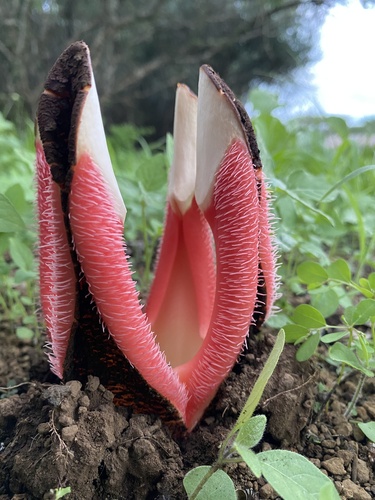
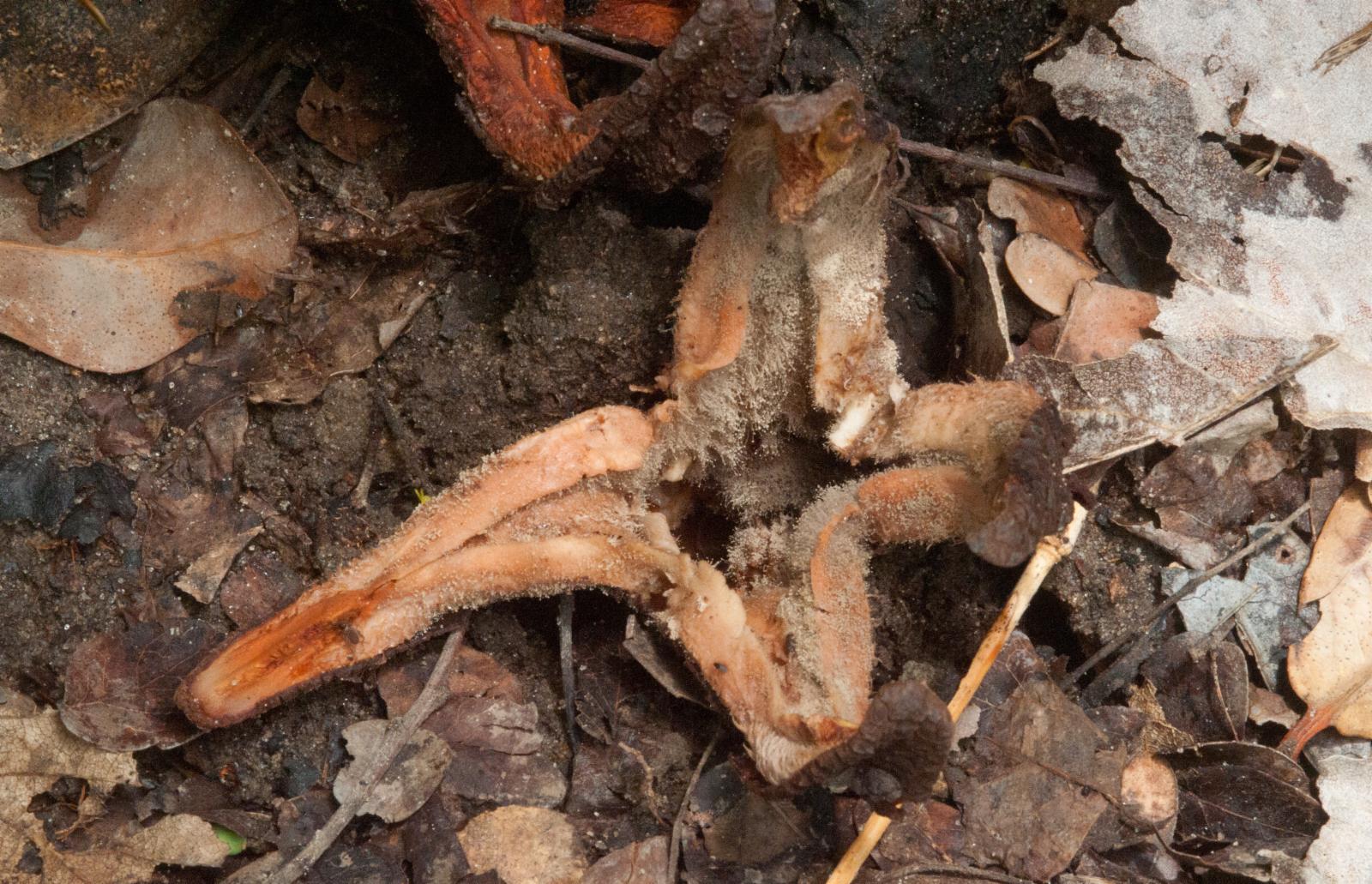
A parasitic plant native to arid regions of Africa, notable for its unusual, fleshy, and often foul-smelling flowers that emerge from the ground.
Benefits & Perks
["rare/collector’s item","wildlife attractant (bees, butterflies, birds)"]
Botanical Classification
| Phylum: | Magnoliophyta |
| Class: | Magnoliopsida |
| Order: | Piperales |
| Family: | Hydnoraceae |
| Genus: | Hydnora |
| Botanical Name: | Hydnora abyssinica |
Plant Characteristics
Basic Information
- Category: Flowers
- Suitable Location: outdoor garden in arid or semi-arid regions
- Suitable For:
- Is Weed: No
- Allergenicity: low
Environmental Needs
- Climate: {"temperatureRange":"15–35°C"}
- Hardiness: {"zones":"9–11"}
- Misting: rarely required, only if ambient humidity is very low
- Drainage: Fast-draining to prevent waterlogging.
- Soil Type: Sandy, rocky, or well-draining cactus mix with minimal organic matter.
Maintenance Level
- Maintenance Level: very low
- Toughness Level: very high
- Pruning Frequency: As needed, typically annually or when damage is observed.
- Pruning Intensity: Light pruning; focus on removing only dead or diseased material.
Care Details
Ideal Sunlight Coverage:
Partial shade; tolerates full sun if acclimated gradually; prefers bright indirect light indoors.
Sunlight Tolerance Tips:
Acclimate to stronger light slowly over weeks; avoid direct midday sun to prevent scorching; adjust placement based on indoor/outdoor conditions.
Care Requirements
Care Difficulty
expert onlychallenging
Sunlight
partial shade
Gradual acclimation; morning sun preferred; rotate plant for even growth.
Watering
every 2–3 weeks during active growth, reduce to monthly in dormancy
Water deeply but infrequently; ensure excellent drainage; avoid waterlogged soil.
Soil
well-draining, sandy, rocky soil
pH: Slightly acidic to neutral (pH 6.0–7.0).
Ensure rapid drainage; avoid water retention; use porous materials.
Temperature
Warm temperatures (20–30°C); tolerates mild fluctuations; prefers stable conditions above 15°C.
Avoid drafts; maintain stable warmth; protect from extreme heat/cold.
Fertilizing
every 3 months with slow-release fertilizer during active growth, none in dormancy
Dilute fertilizer to prevent burn; fertilize only when actively growing; stop in dormancy.
Propagation
Methods
Seeds or division of rhizomes; challenging due to specific conditions required.
Step-by-Step Propagation Guide
- Collect fresh seeds or divide rhizomes.
- Sow/cuttings in medium.
- Maintain warmth and humidity.
- Transplant once established.
Best Time: Spring or early summer when temperatures are warm and stable.
Environment
Warm (20–25°C), high humidity, partial shade.
Medium
Well-draining mix like cactus soil with added perlite or sand.
Hormone
Not typically required for seeds; may aid rhizome division.
Timeline
Seeds: 6–12 months to germinate; rhizomes: roots in 4–8 weeks.
Tools Needed
Sharp knife, sterile potting mix, humidity dome, warm location.
Quick Tips
Use fresh seeds for best germination; keep rhizome divisions moist but not waterlogged.
Pruning & Repotting
Pruning Guide
Method
Snip away damaged parts with clean cuts; avoid over-pruning.
Pruning Plan
Minimal pruning; remove dead or damaged parts to maintain health.
Tools
Pruning shears, sterilizing solution.
Checklist
Inspect for damage; sterilize tools; prune selectively; dispose of clippings.
Repotting Guide
Best Season
Spring, before active growth begins.
Pot Size
One size larger pot; ensure it’s not excessively larger to avoid water retention.
Method
Use fresh well-draining soil; gently tease out roots if compacted; ensure pot has drainage holes.
Suggestions
Repot only when root-bound or soil degrades; infrequent repotting preferred.
Checklist
Check root boundness; prepare new pot; use fresh soil; minimal root disturbance.
Advanced Care Tips
Watering Mastery
Watering Checklist
Check soil dryness; water deeply; ensure drainage; reduce in winter.
How to Apply Water Properly
Water directly at the root zone, ensuring moisture reaches deep but allowing excess to drain freely; water in the morning to prevent fungal issues.
Watering Schedule Tips
Water sparingly, only when soil is completely dry; reduce watering significantly in winter dormancy.
Soil Improvement
Add coarse sand, perlite, or gravel to improve drainage; avoid heavy clay soils.
Temperature Stress Management
Signs of Temperature Issues
Wilting, leaf drop, or stunted growth in cold; scorching or leaf burn in excessive heat.
Cold Stress
Slows growth, may cause root rot due to reduced metabolic activity.
Solution: Move to a warmer location; insulate roots; avoid overwatering.
Hot Stress
Leaf scorch, dehydration, and potential sunburn if not acclimated.
Solution: Provide shade during peak heat; increase humidity; water more frequently but carefully.
Fertilizing Guide
Fertilizing Checklist
Check growth phase; dilute fertilizer; apply to moist soil; avoid winter feeding.
Fertilizing Method
Use a balanced, diluted fertilizer (half-strength) every 4–6 weeks during growing season; avoid fertilizing in winter.
Common Problems & Solutions
Toxicity Warning
Cats
ToxicHydnora abyssinica is toxic to cats when ingested. The roots and tubers contain toxic compounds that can cause severe gastrointestinal and neurological symptoms in felines. The plant's alkaloids and other bioactive substances can lead to significant physiological disturbances in cats.
⚠️ Symptoms:
🌿 Toxic Parts:
⚡ Toxic If:
if eaten
Dogs
ToxicHydnora abyssinica is toxic to dogs when ingested. The roots and tubers contain toxic compounds that can lead to severe gastrointestinal distress and potential neurological symptoms in canines. The plant's alkaloids and other bioactive substances can disrupt normal bodily functions in dogs.
⚠️ Symptoms:
🌿 Toxic Parts:
⚡ Toxic If:
if eaten
Humans
ToxicHydnora abyssinica is known to be toxic to humans when ingested. The roots and tubers contain compounds that can cause severe physiological disturbances, including gastrointestinal and neurological effects. The plant's toxicity is primarily due to the presence of alkaloids and other bioactive substances that interfere with normal cellular functions.
⚠️ Symptoms:
🌿 Toxic Parts:
⚡ Toxic If:
if eaten
Frequently Asked Questions
Q: Is Hydnora abyssinica toxic to pets?
A: There is insufficient data on its toxicity to pets.
Q: How does Hydnora abyssinica reproduce?
A: It reproduces via seeds and is a parasitic plant that relies on host plant roots for nutrients.
Q: What is the typical habitat of Hydnora abyssinica?
A: It thrives in arid and semi-arid regions, often in sandy or rocky soils.
Quick Reference



| Family: | Hydnoraceae |
| Care: | expert only |
| Light: | partial shade |
| Water: | every 2–3 weeks during activ |
Get Expert Care Tips
Download the Plantious app for personalized care reminders and plant identification!
Google Play App Store