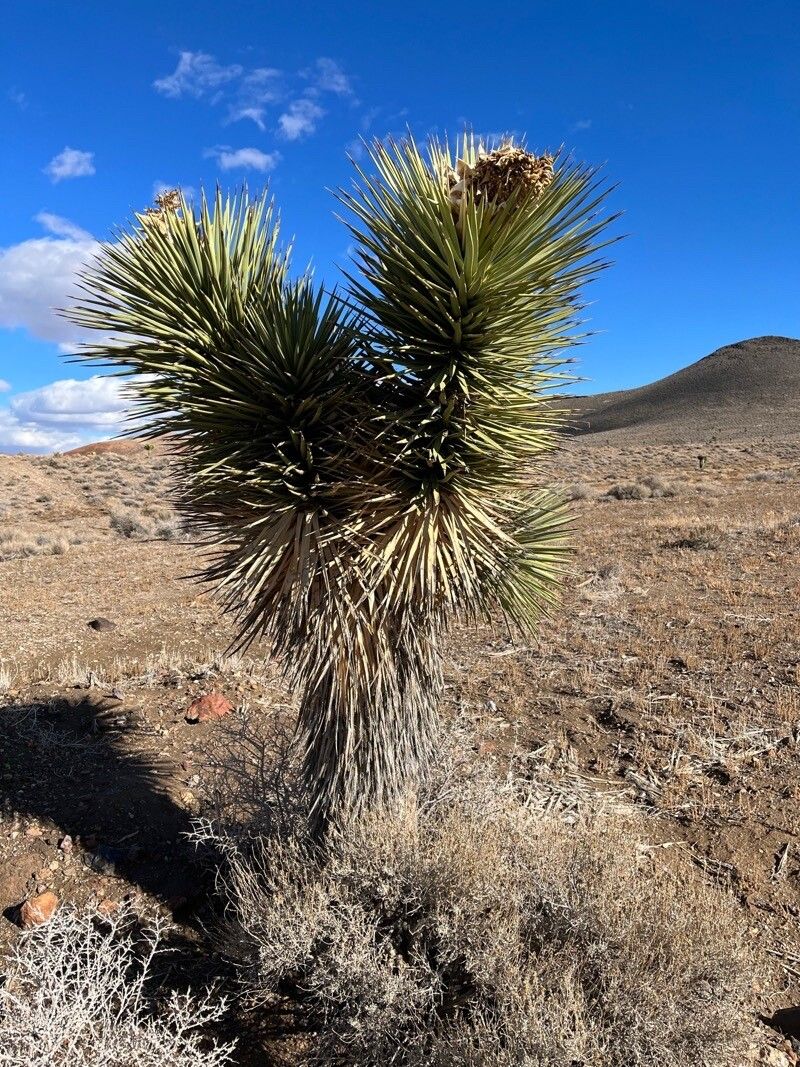
Joshua Tree
yucca brevifolia
Also known as: ["Yucca Palm","Tree Yucca","Desert Tree"]
Overview
A distinctive, tree-like succulent native to the southwestern United States, known for its rugged silhouette and long, spiky leaves.
Benefits & Perks
["drought tolerant","shade tolerant","wildlife attractant (bees, butterflies, birds)"]
Botanical Classification
| Phylum: | Magnoliophyta |
| Class: | Liliopsida |
| Order: | Asparagales |
| Family: | Asparagaceae |
| Genus: | Yucca |
| Botanical Name: | Yucca brevifolia |
Plant Characteristics
Basic Information
- Category: Succulents & Cacti
- Suitable Location: desert or arid regions, outdoor planting in full sun
- Suitable For:
- Is Weed: No
- Allergenicity: low
Environmental Needs
- Climate: {"temperatureRange":"–12–49°C"}
- Hardiness: {"zones":"6–9"}
- Misting: rarely required
- Drainage: Fast-draining.
- Soil Type: Well-draining, sandy, or gritty soil with some organic matter.
Maintenance Level
- Maintenance Level: very low
- Toughness Level: high
- Pruning Frequency: As needed, typically every 2–3 years or when branches become overgrown.
- Pruning Intensity: Moderate to heavy, depending on the plant's condition and desired shape.
Care Details
Ideal Sunlight Coverage:
Full sun (6–8 hours of direct sunlight per day). Tolerates intense desert sun but benefits from some afternoon shade in extreme heat.
Sunlight Tolerance Tips:
Acclimate gradually if moving from shade to full sun; protect from intense midday sun in summer; ensure proper ventilation if grown indoors.
Care Requirements
Care Difficulty
moderatemoderate
Sunlight
full sun
Full sun is essential; avoid deep shade; rotate plant for even growth.
Watering
every 4–6 weeks during active growth, less in winter
Water deeply to encourage deep root growth; avoid frequent shallow watering; adjust frequency based on season and weather.
Soil
well-draining, sandy or rocky soil
pH: Slightly acidic to neutral (pH 6.0–7.0).
Ensure excellent drainage; avoid heavy, water-retentive soils; amend with grit if needed.
Temperature
Prefers hot, arid conditions. Ideal range is 70–90°F (21–32°C) during the day, with tolerance for temperatures down to 0°F (-18°C) in winter.
Protect from frost if below 0°F; avoid sudden temperature changes; ensure good drainage in cold.
Fertilizing
every 3 months with slow-release fertilizer during active growth
Fertilize sparingly; use a balanced formula; apply during active growth.
Propagation
Methods
Stem cuttings or offsets (pups).
Step-by-Step Propagation Guide
- Cut a healthy stem or remove an offset.
- Let the cut end callous for a few days.
- Plant in well-draining medium.
- Keep moist but not waterlogged.
Best Time: Spring or early summer when the plant is actively growing.
Environment
Warm, bright, indirect light; high humidity (e.g., misting or a propagation dome); well-draining medium.
Medium
Well-draining cactus mix or sand and perlite mixture.
Hormone
Optional, but rooting hormone can speed up the process.
Timeline
Roots may develop in 4–8 weeks; establishment can take several months.
Tools Needed
Sharp, sterile knife or shears, rooting hormone (optional), well-draining medium, propagation tray or pot.
Quick Tips
Allow cuttings to callous before planting; use well-draining soil; maintain humidity.
Pruning & Repotting
Pruning Guide
Method
Cut back dead or crossing branches to the main stem or trunk. Remove suckers or offsets if they are unwanted.
Pruning Plan
Prune to remove dead or damaged branches, control size, and improve shape. Focus on maintaining the plant's natural form.
Tools
Pruning shears, loppers, or a saw (for larger branches), gloves, disinfectant.
Checklist
Disinfect tools; prune dead/damaged branches; make clean cuts; wear gloves.
Repotting Guide
Best Season
Spring, when the plant is entering its active growth phase.
Pot Size
One size up from the current pot (e.g., +2–3 inches in diameter).
Method
Remove the plant carefully, trim any dead roots, place in a slightly larger pot with fresh, well-draining soil, and water lightly.
Suggestions
Repot only when the plant becomes root-bound or outgrows its container. Yucca brevifolia is slow-growing and may not need repotting often.
Checklist
Choose a larger pot; use well-draining soil; trim roots if necessary; water lightly after repotting.
Advanced Care Tips
Watering Mastery
Watering Checklist
Check soil moisture before watering; water deeply; ensure drainage; adjust for season.
How to Apply Water Properly
Water at the base of the plant, ensuring moisture reaches the root zone. Water slowly to allow absorption and avoid runoff. Ensure excess water drains away to prevent waterlogging. Water early in the morning to minimize evaporation.
Watering Schedule Tips
Water deeply but infrequently, especially during the growing season (spring and summer). Reduce watering significantly in fall and winter to prevent root rot. Allow the soil to dry out completely between waterings.
Soil Improvement
Add perlite, sand, or gravel to improve drainage; incorporate compost for organic matter.
Temperature Stress Management
Signs of Temperature Issues
Chlorosis or leaf drop in excessive heat; stunted growth or root rot in cold, wet conditions.
Cold Stress
Cold stress can cause root damage, slow growth, and increase susceptibility to fungal infections, even if the plant survives freezing temperatures.
Solution: Ensure good drainage to prevent waterlogged soil; provide wind protection in exposed areas; use mulch to insulate roots in winter.
Hot Stress
Excessive heat can lead to leaf scorch, dehydration, and wilting, especially if combined with poor watering practices.
Solution: Provide some afternoon shade during extreme heat; water deeply but infrequently; ensure good air circulation.
Fertilizing Guide
Fertilizing Checklist
Use diluted fertilizer; apply in spring/summer; avoid over-fertilizing.
Fertilizing Method
Use a balanced, slow-release fertilizer diluted to half strength. Apply once in early spring and once in midsummer. Avoid fertilizing in fall and winter.
Common Problems & Solutions
Toxicity Warning
Cats
Slightly ToxicCats may experience mild gastrointestinal upset if they ingest parts of Yucca brevifolia. The plant's sharp leaves pose a risk of physical injury to the mouth or digestive tract.
⚠️ Symptoms:
🌿 Toxic Parts:
⚡ Toxic If:
if eaten
Dogs
Slightly ToxicIngestion of Yucca brevifolia can lead to mild gastrointestinal upset in dogs due to the presence of saponins and other irritants. The sharp leaves may also cause oral or esophageal injury.
⚠️ Symptoms:
🌿 Toxic Parts:
⚡ Toxic If:
if eaten
Humans
Slightly ToxicYucca brevifolia contains saponins and other compounds that can cause mild gastrointestinal distress when ingested. The plant's physical structure, particularly the sharp leaves, can also cause mechanical injury.
⚠️ Symptoms:
🌿 Toxic Parts:
⚡ Toxic If:
if eaten
Frequently Asked Questions
Q: How tall does the Joshua Tree grow?
A: It typically reaches heights of 15–40 feet, with a slow growth rate.
Q: Does the Joshua Tree flower?
A: Yes, it produces large, creamy-white flowers in spring or early summer.
Q: Is the Joshua Tree suitable for cold climates?
A: It is cold-hardy to about -20°F (-29°C), making it suitable for many temperate regions.
Quick Reference



| Family: | Asparagaceae |
| Care: | moderate |
| Light: | full sun |
| Water: | every 4–6 weeks during activ |
Get Expert Care Tips
Download the Plantious app for personalized care reminders and plant identification!
Google Play App Store