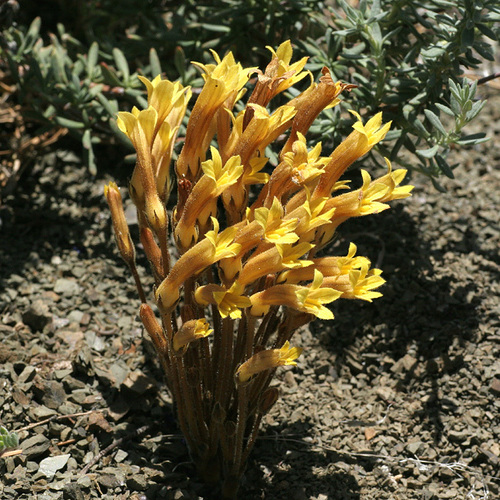
White Broomrape
orobanche alba
Also known as: ["White Broomrape"]
Overview
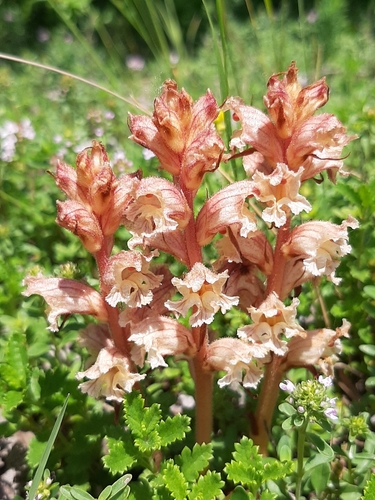
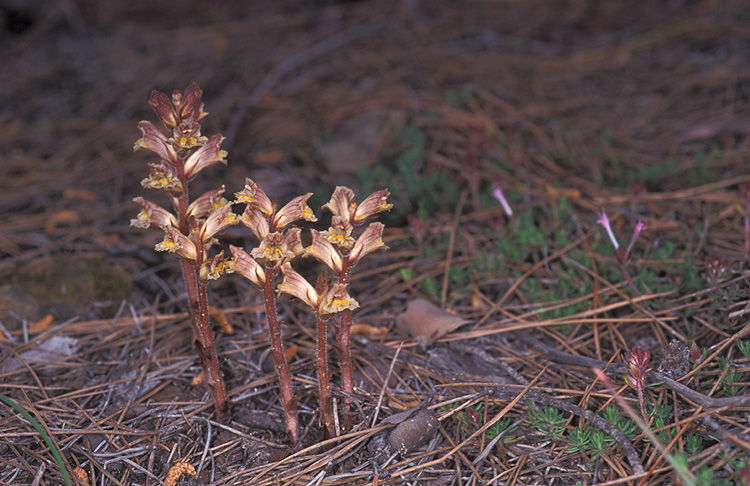
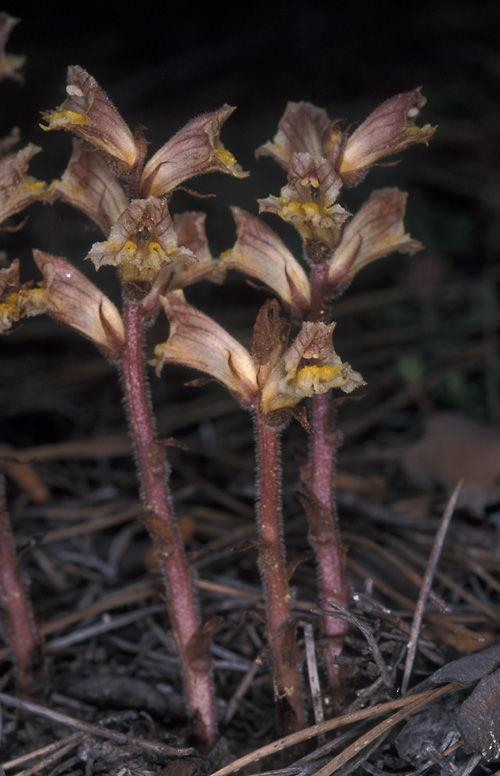
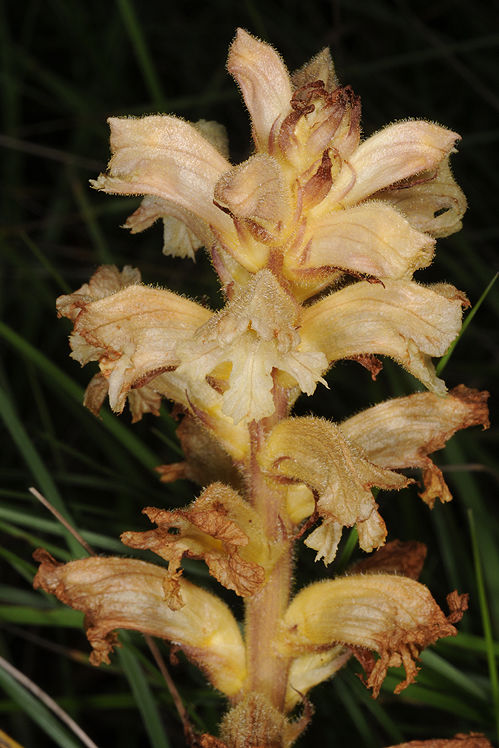
A parasitic herbaceous plant lacking chlorophyll, typically found attached to the roots of host plants.
Benefits & Perks
["rare/collector’s item"]
Botanical Classification
| Phylum: | Magnoliophyta |
| Class: | Magnoliopsida |
| Order: | Lamiales |
| Family: | Orobanchaceae |
| Genus: | Orobanche |
| Botanical Name: | Orobanche alba |
Plant Characteristics
Basic Information
- Category: Herbs & Weeds
- Suitable Location: indoor pot or shaded garden bed
- Suitable For:
- Is Weed: No
- Allergenicity: low
Environmental Needs
- Climate: {"temperatureRange":"10–30°C"}
- Hardiness: {"zones":"5–8"}
- Misting: not required
- Drainage: Fast-draining, depending on the host plant's requirements.
- Soil Type: The soil type should be suitable for the host plant, with good drainage and fertility.
Maintenance Level
- Maintenance Level: very low
- Toughness Level: very low
- Pruning Frequency: Not applicable
- Pruning Intensity: Not applicable
Care Details
Ideal Sunlight Coverage:
Orobanche alba does not require sunlight as it is a parasitic plant. The host plant should receive full sun to partial shade, depending on the host species.
Sunlight Tolerance Tips:
Orobanche alba has no sunlight tolerance as it lacks chlorophyll. Focus on the host plant's light needs, ensuring it is not exposed to excessive sunlight that could stress it.
Care Requirements
Care Difficulty
expert onlychallenging
Sunlight
partial shade
Focus on host plant light needs; avoid direct sunlight on Orobanche; adjust based on host plant requirements.
Watering
rarely required, only when soil is completely dry
Avoid direct watering of Orobanche; water the host plant only when necessary; ensure host plant is healthy to support Orobanche.
Soil
well-drained, sandy soil
pH: Depends on the host plant, typically between 6.0 and 7.5.
Focus on host plant soil needs; ensure good drainage; adjust pH if necessary.
Temperature
Orobanche alba has no specific temperature needs as it is parasitic. The temperature should be suitable for the host plant, typically between 15-30°C (59-86°F).
Monitor host plant temperature; protect from extreme cold or heat; adjust care based on host plant needs.
Fertilizing
not required
Fertilize host plant only; use balanced fertilizer; avoid over-fertilization.
Propagation
Methods
Orobanche alba is typically propagated through seed, which requires specific conditions to germinate, including proximity to a suitable host plant.
Step-by-Step Propagation Guide
- Sow seeds near host plant roots.
- Maintain warm, humid conditions.
- Monitor for germination.
Best Time: Spring, when host plants are actively growing and soil temperatures are适宜 for germination.
Environment
Warm, humid conditions with the host plant's roots in close proximity.
Medium
A mix of sand and peat, with the host plant's roots nearby to facilitate parasitism.
Hormone
Not applicable, as Orobanche alba does not require rooting hormone.
Timeline
Germination can take several weeks to months, depending on conditions and host plant proximity.
Tools Needed
Seed tray, sand, peat, host plant
Quick Tips
Ensure host plant is nearby; maintain humidity; be patient with germination.
Pruning & Repotting
Pruning Guide
Method
Not applicable
Pruning Plan
Orobanche alba does not require pruning as it is a parasitic plant without above-ground stems or leaves.
Tools
Not applicable
Checklist
Not applicable
Repotting Guide
Best Season
Not applicable
Pot Size
Not applicable
Method
Not applicable
Suggestions
Repotting is not necessary for Orobanche alba, as it is a parasitic plant that grows in association with its host.
Checklist
Not applicable
Advanced Care Tips
Watering Mastery
Watering Checklist
Water host plant only; check host plant's moisture level; avoid direct watering of Orobanche.
How to Apply Water Properly
Water the host plant at the root zone, ensuring deep but infrequent watering to encourage strong root growth. Allow the soil to dry between waterings to prevent waterlogging.
Watering Schedule Tips
Water sparingly, as Orobanche alba is a parasitic plant and relies on host plants for moisture. Only water the host plant, not the Orobanche directly, unless the host is under severe drought stress.
Soil Improvement
Improve soil based on host plant needs, such as adding organic matter or adjusting pH.
Temperature Stress Management
Signs of Temperature Issues
Signs of temperature issues will be observed in the host plant, such as wilting, leaf drop, or stunted growth.
Cold Stress
Cold stress affects the host plant, which in turn impacts Orobanche alba. Cold temperatures can slow down host plant growth and nutrient uptake, weakening Orobanche.
Solution: Protect the host plant from cold temperatures by providing adequate insulation or moving it to a warmer location if possible.
Hot Stress
Hot stress affects the host plant, leading to dehydration and reduced nutrient uptake, which can weaken Orobanche alba.
Solution: Ensure the host plant is adequately watered and shaded during hot periods to prevent heat stress.
Fertilizing Guide
Fertilizing Checklist
Fertilize host plant; use diluted fertilizer; monitor host plant's response.
Fertilizing Method
Fertilize the host plant only, as Orobanche alba derives nutrients from the host. Use a balanced fertilizer during the growing season, diluted to half strength.
Common Problems & Solutions
Toxicity Warning
Cats
ToxicCats are susceptible to toxicity from Orobanche alba if ingested, which can cause gastrointestinal and systemic issues.
⚠️ Symptoms:
🌿 Toxic Parts:
⚡ Toxic If:
if eaten
Dogs
ToxicDogs that ingest Orobanche alba may experience gastrointestinal upset and other toxic effects due to the plant's chemical constituents.
⚠️ Symptoms:
🌿 Toxic Parts:
⚡ Toxic If:
if eaten
Humans
ToxicOrobanche alba, commonly known as white broomrape, is a parasitic plant that lacks chlorophyll and can contain toxic compounds. Ingestion can lead to gastrointestinal distress and other systemic effects due to its chemical composition.
⚠️ Symptoms:
🌿 Toxic Parts:
⚡ Toxic If:
if eaten
Frequently Asked Questions
Q: Is Orobanche alba a flowering plant?
A: Yes, it produces small, white flowers, but it is parasitic and lacks chlorophyll.
Q: How does Orobanche alba obtain nutrients?
A: It is a parasitic plant that attaches to the roots of host plants to derive nutrients.
Q: Is Orobanche alba toxic to pets?
A: There is insufficient data on its toxicity to pets.
Quick Reference

| Family: | Orobanchaceae |
| Care: | expert only |
| Light: | partial shade |
| Water: | rarely required, only when soi |
Get Expert Care Tips
Download the Plantious app for personalized care reminders and plant identification!
Google Play App Store