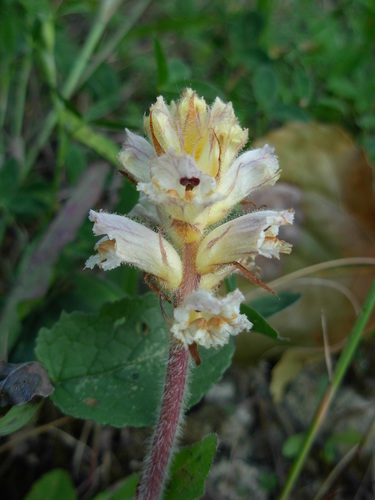
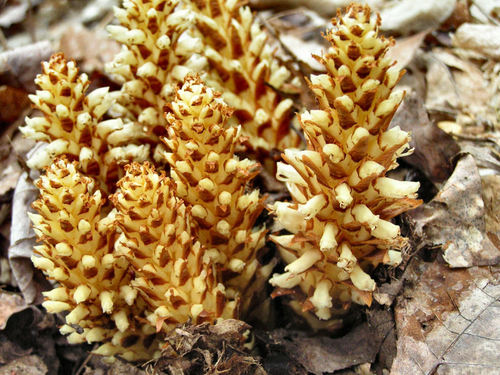
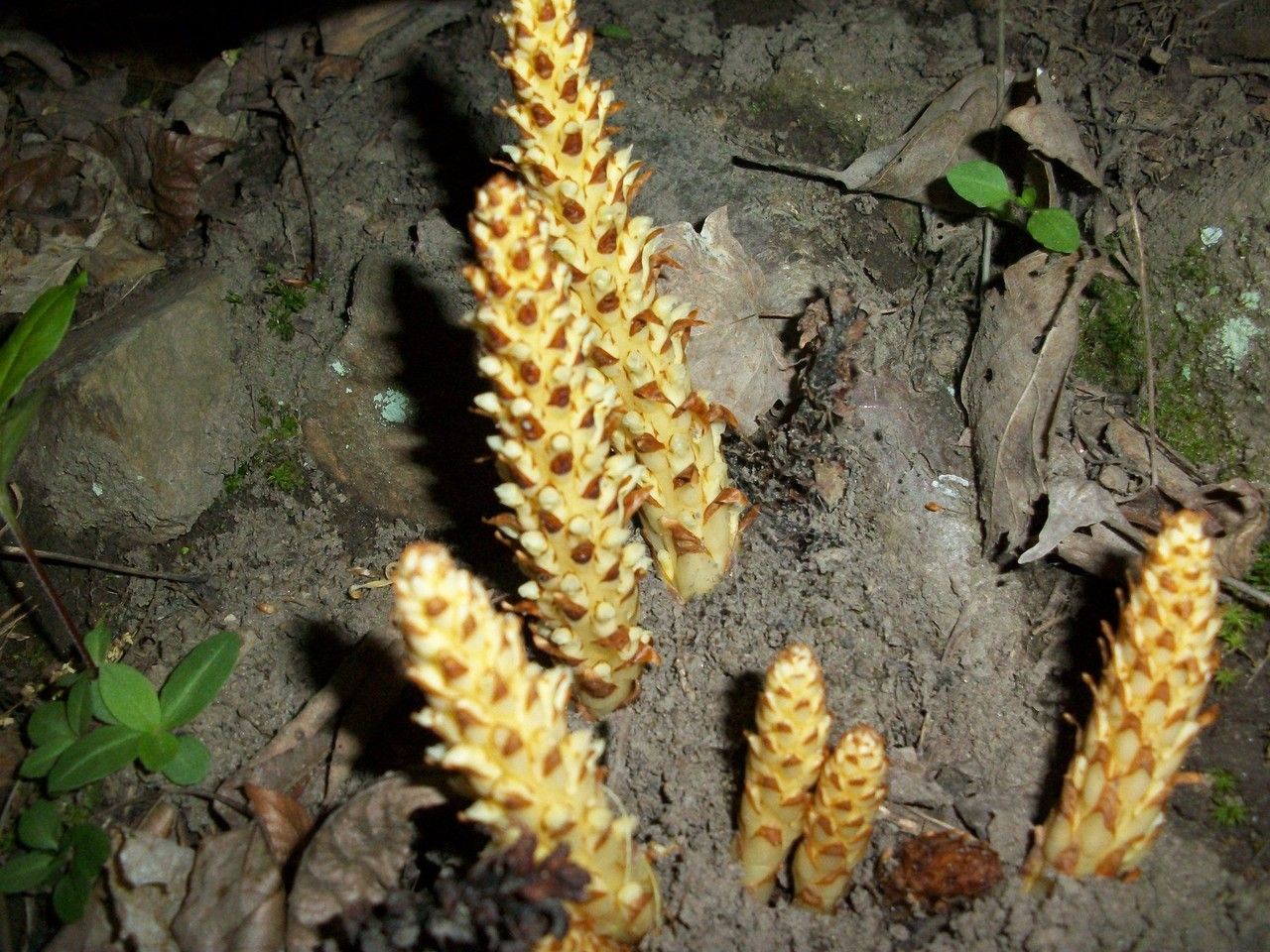
American Broomrape
conopholis americana
Also known as: ["Oak Root Broomrape","Cone Broomrape"]
Overview
A parasitic herbaceous plant without chlorophyll, relying on host tree roots for nutrients.
Benefits & Perks
["rare/collector’s item","wildlife attractant (bees, butterflies, birds)"]
Botanical Classification
| Phylum: | Magnoliophyta |
| Class: | Magnoliopsida |
| Order: | Lamiales |
| Family: | Orobanchaceae |
| Genus: | Conopholis |
| Botanical Name: | Conopholis americana |
Plant Characteristics
Basic Information
- Category: Herbs & Weeds
- Suitable Location: under the canopy of host trees, such as oaks or beeches
- Suitable For:
- Is Weed: No
- Allergenicity: low
Environmental Needs
- Climate: {"temperatureRange":"–40–30°C"}
- Hardiness: {"zones":"3–8"}
- Misting: not required
- Drainage: Not applicable; grows on host roots, not in soil.
- Soil Type: Not soil-dependent; grows as a parasitic plant on host roots (e.g., oak).
Maintenance Level
- Maintenance Level: very low
- Toughness Level: very low
- Pruning Frequency: As needed; typically minimal or none.
- Pruning Intensity: Light; only remove dead or diseased parts.
Care Details
Ideal Sunlight Coverage:
Partial shade to full shade; tolerates low light conditions; avoid direct sunlight.
Sunlight Tolerance Tips:
Acclimate slowly to brighter conditions if moving from deep shade; protect from harsh afternoon sun; ideal for understory or shaded garden beds.
Care Requirements
Care Difficulty
expert onlychallenging
Sunlight
partial shade to full shade
Avoid direct sun; prefers dappled light; adjust placement based on intensity.
Watering
infrequently, only when soil is completely dry, typically every 3–4 weeks
Water only when soil is fully dry; avoid overwatering to prevent root rot; water deeply but infrequently.
Soil
not applicable, as it is a root parasite
pH: Not applicable.
Ensure host plant is healthy; avoid soil disturbance around host roots.
Temperature
Cool to moderate temperatures (50–75°F or 10–24°C); thrives in cooler climates; sensitive to heat.
Protect from extreme heat; maintain cool conditions; adjust care for seasonal shifts.
Fertilizing
rarely, if ever, as it is a parasitic plant obtaining nutrients from host roots
Avoid fertilizing; nutrients from host roots suffice; only fertilize if signs of deficiency appear.
Propagation
Methods
Seed propagation; rarely vegetative due to parasitic nature.
Step-by-Step Propagation Guide
- Collect fresh seeds.
- Sow near host roots.
- Maintain moisture and shade.
- Wait for germination.
Best Time: Fall or early spring when host plants are active.
Environment
Cool temperatures, high humidity, indirect light; must be near host roots.
Medium
Well-draining seed starting mix; requires proximity to host roots.
Hormone
Not applicable for seeds; rooting hormone unnecessary.
Timeline
Germination can take months; establishment dependent on host proximity.
Tools Needed
Seed trays, host plant proximity, shade cloth.
Quick Tips
Sow near host roots; maintain consistent moisture; patience required for germination.
Pruning & Repotting
Pruning Guide
Method
Snip dead stems; no specific technique required.
Pruning Plan
Minimal pruning; remove dead or damaged parts as needed.
Tools
Hand pruners, sterilized scissors.
Checklist
Inspect for dead parts; sterilize tools; prune carefully.
Repotting Guide
Best Season
Not applicable; grows in natural habitat.
Pot Size
Not applicable.
Method
Not applicable; avoid disturbing established plants.
Suggestions
Not typically repotted; grows best in situ near host roots.
Checklist
Not applicable.
Advanced Care Tips
Watering Mastery
Watering Checklist
Check soil dryness; water deeply; ensure drainage; adjust for season.
How to Apply Water Properly
Water directly at the root zone, ensuring thorough saturation without pooling; allow excess water to drain freely; water in the morning to minimize fungal risk.
Watering Schedule Tips
Water sparingly, allowing soil to dry completely between infrequent waterings; reduce watering significantly in winter dormancy.
Soil Improvement
Not applicable; focus on host plant health.
Temperature Stress Management
Signs of Temperature Issues
Wilting, leaf drop, or cessation of growth in excessive heat; stunted growth or chlorosis in cold stress.
Cold Stress
Slows metabolic processes; may enter dormancy; prolonged cold can damage roots.
Solution: Provide winter protection in colder zones; mulch around base; avoid overwatering during dormancy.
Hot Stress
Leaves may scorch, wilt, or drop; growth may halt; increased susceptibility to pests.
Solution: Provide shade during peak heat; increase humidity; water carefully to avoid heat shock.
Fertilizing Guide
Fertilizing Checklist
Check for deficiency; avoid feeding; rely on host association.
Fertilizing Method
Generally does not require fertilization; derives nutrients from host roots (e.g., oak); avoid feeding unless severely deficient.
Common Problems & Solutions
Toxicity Warning
Cats
Slightly ToxicCats that ingest Conopholis americana may experience mild gastrointestinal discomfort. The plant's parasitic nature and lack of chlorophyll contribute to its relatively low toxicity level.
⚠️ Symptoms:
🌿 Toxic Parts:
⚡ Toxic If:
if eaten
Dogs
Slightly ToxicIngestion of Conopholis americana by dogs may lead to mild gastrointestinal upset. The plant's lack of chlorophyll and parasitic nature may result in limited toxicity compared to other plants.
⚠️ Symptoms:
🌿 Toxic Parts:
⚡ Toxic If:
if eaten
Humans
Slightly ToxicConopholis americana contains compounds that can cause mild gastrointestinal distress and other systemic effects when ingested. The plant lacks chlorophyll and derives nutrients from host trees, which may contribute to its limited toxicity profile.
⚠️ Symptoms:
🌿 Toxic Parts:
⚡ Toxic If:
if eaten
Frequently Asked Questions
Q: How does Conopholis americana obtain nutrients?
A: It is a parasitic plant that attaches to the roots of host trees, primarily oaks, to derive nutrients.
Q: Is Conopholis americana toxic to humans or pets?
A: Toxicity data is limited, so it is advised to treat it as potentially harmful.
Q: Can Conopholis americana be grown in a typical garden?
A: No, it requires a specific host tree and is not suited for conventional cultivation.
Quick Reference
| Family: | Orobanchaceae |
| Care: | expert only |
| Light: | partial shade to full shade |
| Water: | infrequently, only when soil i |
Get Expert Care Tips
Download the Plantious app for personalized care reminders and plant identification!
Google Play App Store