Dodder
cuscuta epithymum
Also known as: ["Common Dodder","Love Vine","Strangle Vine"]
Overview
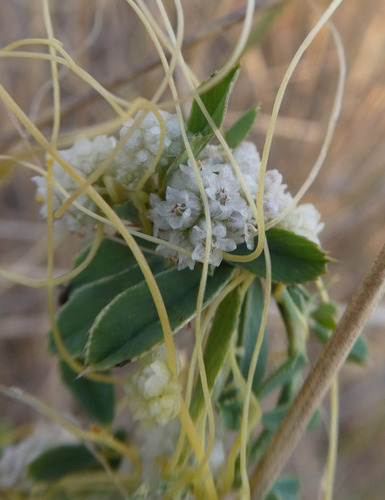
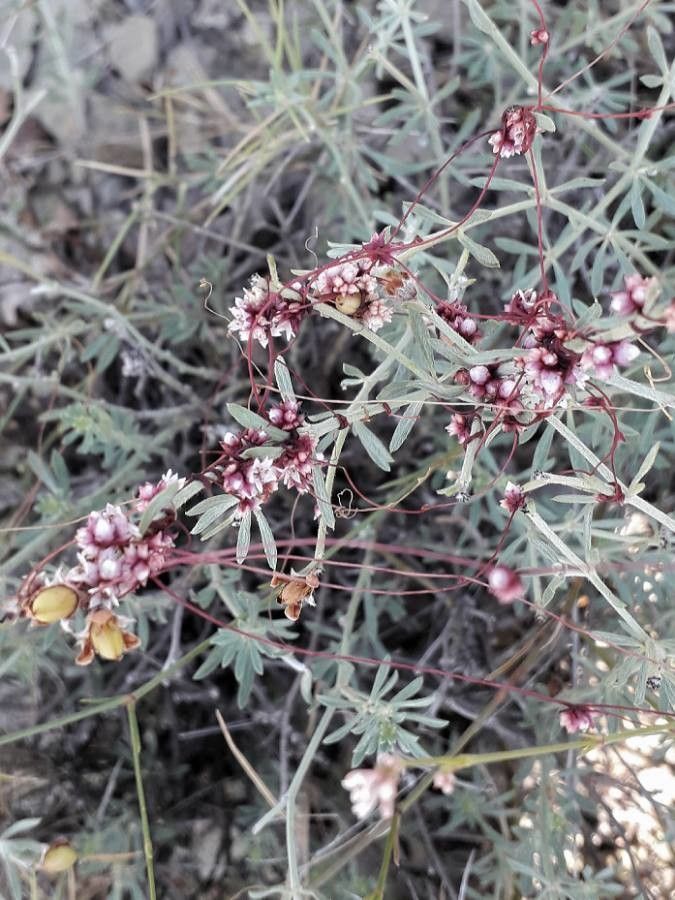
A parasitic vine that lacks chlorophyll and derives nutrients from host plants.
Benefits & Perks
["rare/collector’s item"]
Botanical Classification
| Phylum: | Magnoliophyta |
| Class: | Magnoliopsida |
| Order: | Solanales |
| Family: | Convolvulaceae |
| Genus: | Cuscuta |
| Botanical Name: | Cuscuta epithymum |
Plant Characteristics
Basic Information
- Category: Herbs & Weeds
- Suitable Location: on host plants in open or partially shaded areas
- Suitable For:
- Is Weed: No
- Allergenicity: low
Environmental Needs
- Climate: {"temperatureRange":"5–30°C"}
- Hardiness: {"zones":"3–9"}
- Misting: rarely required
- Drainage: N/A
- Soil Type: Not applicable, as Cuscuta grows on host plants and does not require soil.
Maintenance Level
- Maintenance Level: very low
- Toughness Level: very low
- Pruning Frequency: As needed, typically after flowering or if stems become discolored or detached.
- Pruning Intensity: Light pruning; remove only dead or unwanted parts.
Care Details
Ideal Sunlight Coverage:
Prefers partial shade; can tolerate full sun if host plant provides some shade. Generally, bright indirect light is ideal.
Sunlight Tolerance Tips:
Acclimate gradually to direct sunlight; avoid prolonged exposure to intense midday sun; provide shade if grown on light-colored or thin-leaved hosts.
Care Requirements
Care Difficulty
expert onlymoderate
Sunlight
full sun to partial shade
Avoid intense midday sun; provide partial shade; monitor host plant's light needs.
Watering
as needed, allowing soil to dry between waterings
Avoid overwatering; water only when necessary; ensure host plant is adequately hydrated.
Soil
not applicable (parasitic plant)
pH: N/A
N/A
Temperature
Adaptable to a range of temperatures, typically thriving in 60–80°F (15–27°C). Can tolerate cooler or warmer conditions if the host plant is healthy.
Monitor host plant's temperature tolerance; avoid extreme fluctuations; ensure adequate hydration.
Fertilizing
not required
Fertilize host plant, not Cuscuta; use balanced fertilizer; avoid over-fertilization.
Propagation
Methods
Seed or stem cuttings. Seeds are more common and reliable for home growers.
Step-by-Step Propagation Guide
- Sow seeds or place cuttings near host.
- Maintain humidity.
- Ensure indirect light.
- Monitor for attachment.
Best Time: Spring or early summer when host plants are actively growing.
Environment
Warm, humid environment with indirect light; host plant should be within reach for attachment.
Medium
Well-draining soil or sphagnum moss; requires a host plant nearby for attachment.
Hormone
Not typically necessary, but rooting hormone can encourage quicker attachment to host.
Timeline
Seeds may take 2–4 weeks to germinate; cuttings may take 1–2 weeks to root and attach to host.
Tools Needed
Seed tray, rooting hormone (optional), humidity dome, sharp scissors.
Quick Tips
Ensure host is nearby; maintain high humidity; avoid direct sunlight during propagation.
Pruning & Repotting
Pruning Guide
Method
Snip off unwanted stems close to the attachment point on the host plant.
Pruning Plan
Minimal pruning needed. Remove dead or detached stems to maintain appearance and prevent spread.
Tools
Sharp scissors or pruning shears.
Checklist
Check for dead stems; snip carefully; dispose of removed parts.
Repotting Guide
Best Season
N/A
Pot Size
N/A
Method
N/A
Suggestions
Not applicable, as Cuscuta is typically grown on host plants and does not require repotting.
Checklist
N/A
Advanced Care Tips
Watering Mastery
Watering Checklist
Check host plant moisture; water sparingly; ensure good drainage.
How to Apply Water Properly
Water the host plant thoroughly, ensuring the parasitic Cuscuta can absorb moisture indirectly. If watering directly, apply sparingly to the base of the Cuscuta, avoiding waterlogged conditions.
Watering Schedule Tips
Water sparingly, as Cuscuta epithymum is a parasitic plant and derives most of its moisture from host plants. Only water if the host plant is not providing sufficient moisture or during prolonged dry periods.
Soil Improvement
N/A
Temperature Stress Management
Signs of Temperature Issues
Wilting, yellowing, or cessation of growth; may detach from host in extreme conditions.
Cold Stress
Low temperatures can slow growth or cause dormancy, but Cuscuta is generally tolerant of mild frosts if the host is hardy.
Solution: Ensure host plant is cold-hardy; provide minimal protection if temperatures drop below freezing.
Hot Stress
Excessive heat can desiccate the plant or cause it to detach from the host if water stress is severe.
Solution: Ensure host plant is well-watered; provide some shade during peak heat; maintain humidity if possible.
Fertilizing Guide
Fertilizing Checklist
Fertilize host only; dilute fertilizer; apply during growing season.
Fertilizing Method
Generally not required, as nutrients are obtained from the host plant. If fertilizing the host, use a balanced, diluted fertilizer during growing season.
Common Problems & Solutions
Toxicity Warning
Cats
Slightly ToxicCats may experience mild gastrointestinal discomfort if they ingest Cuscuta epithymum. The plant's parasitic nature and potential irritant compounds can cause adverse effects.
⚠️ Symptoms:
🌿 Toxic Parts:
⚡ Toxic If:
if eaten
Dogs
Slightly ToxicIn dogs, ingestion of Cuscuta epithymum may lead to mild gastrointestinal upset due to the plant's parasitic nature and potential irritant compounds.
⚠️ Symptoms:
🌿 Toxic Parts:
⚡ Toxic If:
if eaten
Humans
Slightly ToxicCuscuta epithymum, commonly known as dodder, contains compounds that can cause mild gastrointestinal distress when ingested. The plant lacks chlorophyll and is parasitic, deriving nutrients from host plants, which may contribute to its potential toxicity.
⚠️ Symptoms:
🌿 Toxic Parts:
⚡ Toxic If:
if eaten
Frequently Asked Questions
Q: Is Cuscuta epithymum harmful to other plants?
A: Yes, it is a parasitic plant that can severely damage or kill host plants by draining their nutrients.
Q: Can Cuscuta epithymum be grown indoors?
A: It requires a host plant to survive, making indoor cultivation impractical without a suitable host.
Q: Does Cuscuta epithymum have any medicinal uses?
A: Historically, it has been used in traditional medicine, but its efficacy and safety are not well-documented.
Quick Reference


| Family: | Convolvulaceae |
| Care: | expert only |
| Light: | full sun to partial shade |
| Water: | as needed, allowing soil to dr |
Get Expert Care Tips
Download the Plantious app for personalized care reminders and plant identification!
Google Play App Store