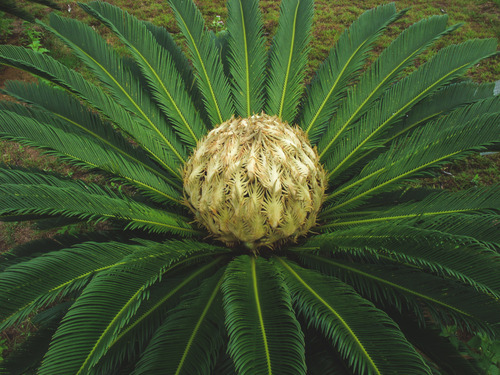
How to identify Sago Palm indoors and understand why it is a high-priority risk for pets.
Fast ID
Cycas revoluta forms a stiff rosette of pinnate fronds from a rounded caudex; older plants may produce cones and round seeds. Leaflets are narrow and rigid; the plant silhouette is symmetrical and palm-like.
Why it is high-risk
All parts are toxic; seeds/nuts are most dangerous. Ingestion may cause vomiting, diarrhea, lethargy, and can progress to liver injury—seek immediate veterinary advice.
Safer display tips
Avoid displaying where pets roam. If kept, use secure, elevated spots and sweep any dropped seeds/leaves.